
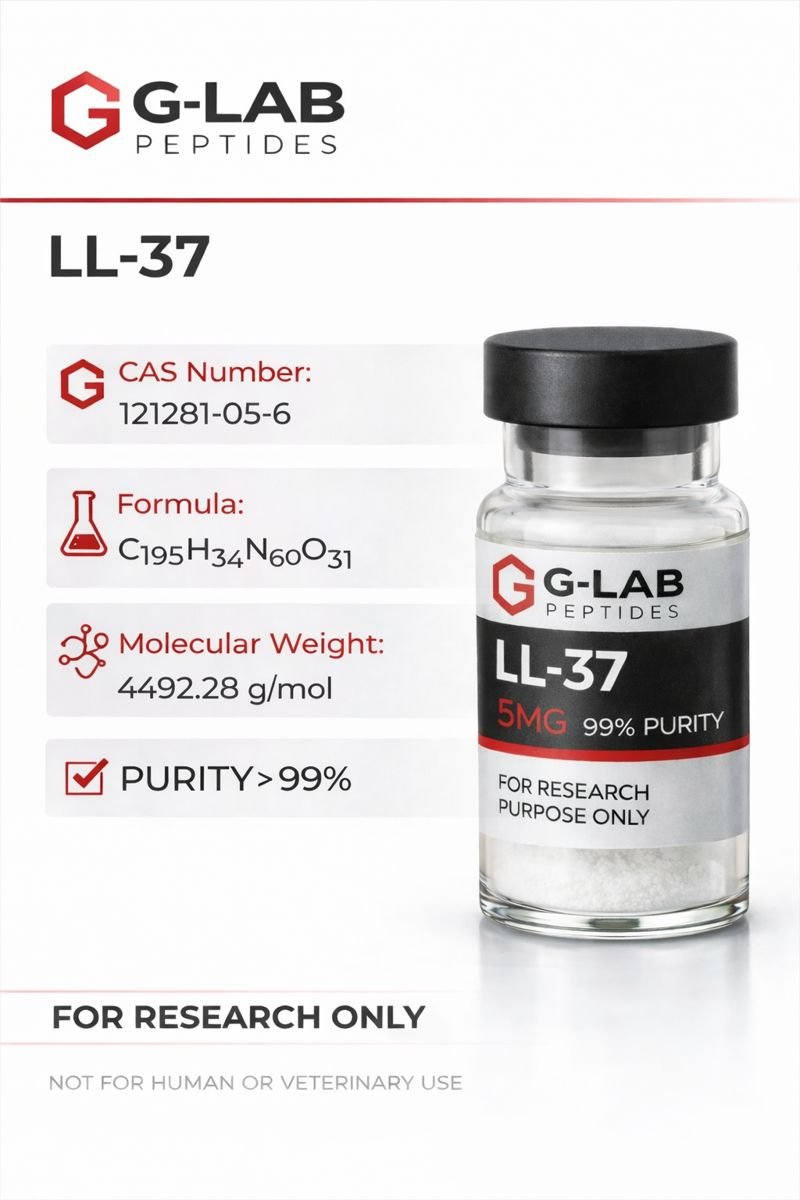
LL-37 (5mg)
$81.90
| Quantity | Discount | Price |
|---|---|---|
| 5 - 8 | 5% | $77.81 |
| 9+ | 10% | $73.71 |
Free shipping on orders over $200!
- Satisfaction Guaranteed
- No Hassle Refunds
- Secure Payments
LL-37 (5 mg)
LL-37 is the only known human cathelicidin-derived antimicrobial peptide. It is generated from the C-terminal region of the precursor protein hCAP18 and consists of 37 amino acids beginning with two leucine residues (“LL”). LL-37 is a cationic, amphipathic host defense peptide with a broad portfolio of experimental actions:
Direct antimicrobial activity (bacteria, fungi, some viruses)
Immunomodulation and chemotaxis
Promotion of wound healing and angiogenesis
Regulation of apoptosis and cellular stress responses PubMed+2ScienceDirect+2
Because of its pleiotropic effects, LL-37 is widely used as a tool peptide in studies of innate immunity, epithelial biology, tissue repair, and inflammatory disease.
Specifications
Synonyms: LL-37, hCAP18-derived peptide, human cathelicidin, CAMP peptide
Length: 37 amino acids; net charge +6 at physiological pH MDPI
Class: Cationic antimicrobial / host defense peptide (HDP)
Biophysical properties:
Amphipathic α-helical structure in membrane-mimicking environments
Strong affinity for negatively charged microbial membranes and LPS/LTA ScienceDirect+1
Mechanism of Action and Antimicrobial Activity
LL-37 exerts direct antimicrobial effects primarily via:
Electrostatic interaction with negatively charged bacterial surfaces (LPS, LTA)
Insertion into lipid bilayers, forming discrete membrane lesions and pores
Membrane permeabilization, leading to rapid disruption of microbial integrity and death ScienceDirect+2ASM Journals+2
It displays activity against Gram-positive and Gram-negative bacteria, some fungi, and enveloped viruses, making it a model peptide for innate immune defenses. PubMed+1
Immunomodulation and Innate Immune Signaling
Beyond direct killing, LL-37 is a potent immunomodulatory peptide:
Acts as a chemotactic factor for neutrophils, monocytes, and T cells via receptors such as FPRL1 (FPR2) and P2X7 PMC+1
Forms complexes with nucleic acids that can alter innate immune sensing (e.g., TLR pathways) and influence antiviral responses Cell+1
Modulates cytokine production (both pro- and anti-inflammatory) in epithelial and immune cells, depending on context PMC+1
These properties are highly relevant to experimental models of autoimmunity, chronic inflammation, and host–pathogen interactions.
Wound Healing, Angiogenesis, and Tissue Repair
LL-37 has been repeatedly shown to support tissue repair processes:
Angiogenesis: LL-37 stimulates endothelial cell proliferation, migration, and formation of capillary-like structures, driving angiogenesis in vitro and in vivo. Junior Chamber International+1
Epithelial wound closure: It accelerates wound healing of airway and cutaneous epithelium by enhancing cell migration and proliferation. The Journals of Physiology+1
Apoptosis modulation: LL-37 can protect certain host cells (e.g., keratinocytes) from apoptosis, while selectively permeabilizing and clearing apoptotic leukocytes in a manner analogous to its antimicrobial activity. JID Online+2ASM Journals+2
These data make LL-37 a valuable model peptide for studying the interface between host defense, angiogenesis, and tissue regeneration.
LL-37 in Inflammation, Autoimmunity, and Viral Research
Review articles highlight that LL-37 is involved in multiple inflammatory and immune settings:
Dysregulated LL-37 responses have been linked to autoimmune and inflammatory diseases, including psoriasis and lupus, where LL-37–nucleic acid complexes may aberrantly activate innate receptors. PMC+1
In viral research, LL-37 is explored as a host defense peptide with potential roles in respiratory viral infections, including SARS-CoV-2, due to its membrane-active and immunomodulatory characteristics. Frontiers+1
These effects are complex and context-dependent, reinforcing LL-37 as a research probe, not a therapeutic agent.
Other Experimental Applications
Cancer biology: LL-37 has been studied for its dual roles in tumor promotion or suppression, depending on tissue and microenvironment. PubMed+1
Biomaterials and coatings: Used to functionalize surfaces with antimicrobial and pro-healing properties.
Systems immunology: Model peptide for studying host defense peptide networks and cationic peptide–membrane interactions.
Research Use Only – Important Notice
This LL-37 (5 mg) product is supplied strictly for laboratory research use:
Not for human or veterinary use
Not for diagnostic, therapeutic, or cosmetic applications
Intended solely for in vitro assays and/or controlled experimental animal models by qualified personnel
All descriptions provided summarize findings from experimental and preclinical research and must not be interpreted as medical advice or claims of clinical efficacy
References – LL-37
Vandamme D et al. A comprehensive summary of LL-37, the factotum human cathelicidin peptide. Peptides.
https://pubmed.ncbi.nlm.nih.gov/23246832/ PubMedVoronko OE et al. Antimicrobial peptides of the cathelicidin family: focus on structure–function. Int J Mol Sci.
https://www.mdpi.com/1422-0067/26/16/8103 MDPIKoczulla R et al. An angiogenic role for the human peptide antibiotic LL-37/cathelicidin. J Clin Invest.
https://www.jci.org/articles/view/17545 Junior Chamber InternationalShaykhiev R et al. Human endogenous antibiotic LL-37 stimulates airway epithelial wound closure. Am J Physiol Lung Cell Mol Physiol.
https://journals.physiology.org/doi/full/10.1152/ajplung.00286.2004 The Journals of PhysiologyChamorro CI et al. The human antimicrobial peptide LL-37 suppresses apoptosis in keratinocytes. J Invest Dermatol.
https://www.jidonline.org/article/S0022-202X%2815%2934292-5/fulltext JID OnlinePahar B et al. Immunomodulatory role of the antimicrobial LL-37 peptide in autoimmune and inflammatory diseases. Int J Mol Sci.
https://www.ncbi.nlm.nih.gov/pmc/articles/PMC7565865/ PMCAloul KM et al. Upregulating human cathelicidin LL-37 in the context of SARS-CoV-2 infection. Front Immunol.
https://www.frontiersin.org/articles/10.3389/fimmu.2022.880961/full FrontiersXhindoli D et al. The human cathelicidin LL-37 – a pore-forming antibacterial peptide and host defense mediator. Biochim Biophys Acta.
https://www.sciencedirect.com/science/article/pii/S0005273615003685 ScienceDirectSeil M et al. Spotlight on human LL-37, an immunomodulatory peptide. (review of signaling and apoptosis effects).
https://www.ncbi.nlm.nih.gov/pmc/articles/PMC4034075/ PMCZielke C et al. Complexation of the human cathelicidin LL-37 with nucleic acids and innate immune stimulation. Biophys J.
https://www.cell.com/biophysj/fulltext/S0006-3495%2823%2900671-9 Cell
Related products
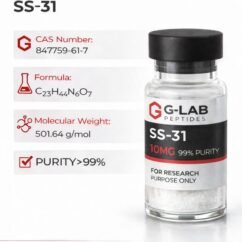
SS-31
Price range: $65.00 through $210.00Select options This product has multiple variants. The options may be chosen on the product page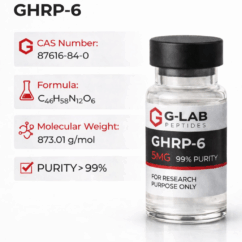
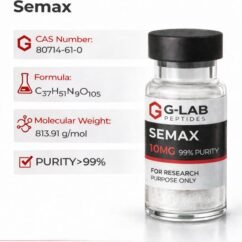
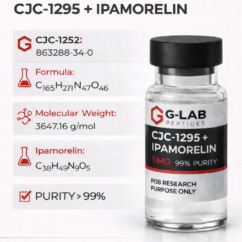 CJC-1295 + Ipamorelin (10mg)
  HGH Fragment 176-191 (5mg)
  5-Amino (10mg)