
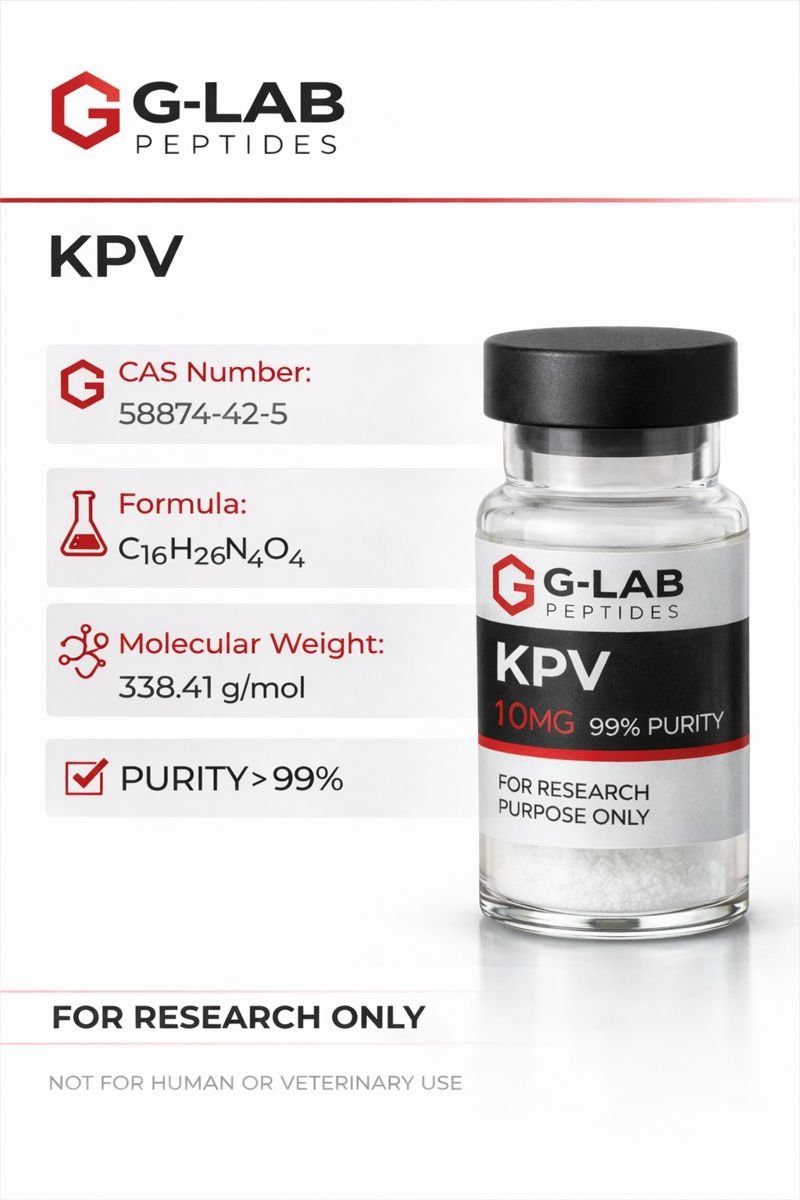
KPV (10mg)
$60.99
| Quantity | Discount | Price |
|---|---|---|
| 5 - 8 | 5% | $57.94 |
| 9+ | 10% | $54.89 |
Free shipping on orders over $200!
- Satisfaction Guaranteed
- No Hassle Refunds
- Secure Payments
KPV Peptide (10 mg)
Anti-Inflammatory Signaling Peptide Derived from α-MSH
KPV (Lys-Pro-Val) is a short bioactive tripeptide derived from the C-terminal sequence of α-melanocyte-stimulating hormone (α-MSH).
Unlike the full α-MSH molecule, KPV lacks melanogenic activity and instead exhibits potent anti-inflammatory and immunomodulatory properties, making it a valuable research peptide for studies involving skin inflammation, gut inflammation, epithelial barrier integrity, and immune signaling.
KPV has been extensively studied in cell culture and animal models for its ability to downregulate pro-inflammatory cytokines and restore tissue homeostasis.
Specifications
Name: KPV
Sequence: Lys-Pro-Val
Molecular Formula: C₁₆H₂₉N₅O₅
Molecular Weight: ~387.43 g/mol
Class: Anti-inflammatory signaling peptide
Origin: C-terminal fragment of α-MSH
Mechanism of Action & Anti-Inflammatory Signaling
KPV exerts its biological activity primarily through melanocortin-related anti-inflammatory pathways, without activating melanogenesis.
Experimental studies indicate that KPV:
Inhibits NF-κB signaling, a central regulator of inflammation
Reduces production of pro-inflammatory cytokines such as TNF-α, IL-1β, IL-6, and IL-8
Modulates immune cell activation and cytokine release
Supports epithelial barrier integrity
Unlike corticosteroids or systemic immunosuppressants, KPV demonstrates localized, targeted anti-inflammatory signaling in experimental models.
KPV and Skin Inflammation Research
KPV has been widely studied in dermatological research contexts:
In keratinocyte and fibroblast models, KPV reduced inflammatory cytokine release following chemical or microbial stimulation
In experimental dermatitis and colitis models, KPV improved tissue architecture and reduced inflammatory infiltrates
Studies suggest KPV may help regulate inflammatory responses without impairing normal cellular turnover
These findings support KPV’s role as a research peptide for inflammatory skin conditions, barrier repair, and immune balance studies.
KPV and Gut / Epithelial Barrier Research
One of the most studied areas of KPV research is intestinal inflammation:
In murine models of colitis, KPV significantly reduced disease severity, cytokine production, and epithelial damage
KPV demonstrated the ability to restore tight junction integrity and reduce immune-mediated epithelial injury
Unlike full α-MSH, KPV showed improved stability and targeted activity in gut tissue models
This has positioned KPV as a valuable tool in gastrointestinal and mucosal immunology research.
Immunomodulatory Properties
KPV does not act as a broad immunosuppressant. Instead, studies indicate it:
Modulates excessive inflammatory signaling
Helps normalize immune responses
Preserves physiological immune defense mechanisms
This selective immunomodulation is one reason KPV continues to be explored as a next-generation anti-inflammatory research peptide.
Other Experimental Applications
Cosmetic science research: inflammation control, redness reduction, skin barrier support
Wound-healing environments: by limiting excessive inflammatory cascades
Microbiome-associated inflammation models: interaction between epithelial cells and immune signaling
Research Use Only – Important Notice
This KPV (10 mg) product is supplied exclusively for laboratory research purposes.
Not for human or veterinary use
Not for diagnostic, therapeutic, or cosmetic application in humans
Intended only for in vitro studies and controlled experimental animal models conducted by qualified professionals
All descriptions above summarize findings from preclinical and mechanistic studies and are provided strictly for educational and informational purposes.
References
Getting SJ et al. Anti-inflammatory effects of the melanocortin peptide KPV in models of inflammatory bowel disease. Journal of Pharmacology and Experimental Therapeutics. 2003.
https://pubmed.ncbi.nlm.nih.gov/12522192/Brzoska T et al. Anti-inflammatory activity of melanocortin peptides in skin inflammation. Journal of Investigative Dermatology. 2008.
https://pubmed.ncbi.nlm.nih.gov/18219282/Kannengiesser C et al. KPV inhibits NF-κB activation and cytokine release in epithelial cells. Peptides. 2008.
https://pubmed.ncbi.nlm.nih.gov/18420342/Catania A et al. The neuroimmunomodulatory role of melanocortins and their peptides. Trends in Pharmacological Sciences. 2010.
https://pubmed.ncbi.nlm.nih.gov/20045206/Schauer E et al. Melanocortin peptides modulate inflammatory responses in keratinocytes. Endocrinology. 1994.
https://pubmed.ncbi.nlm.nih.gov/8037220/
Related products
Tesamorelin
Price range: $86.90 through $115.00Select options This product has multiple variants. The options may be chosen on the product page
MOTS-c
Price range: $76.90 through $155.00Select options This product has multiple variants. The options may be chosen on the product page
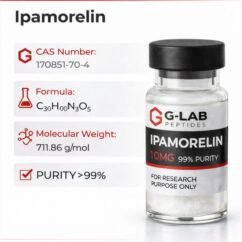 Ipamorelin (10mg)
 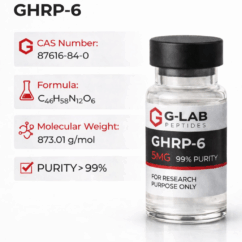 GHRP-6 (5mg)
 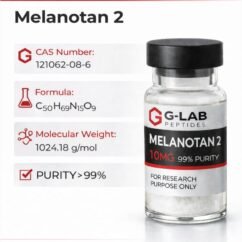 Melanotan 2 (10mg)
 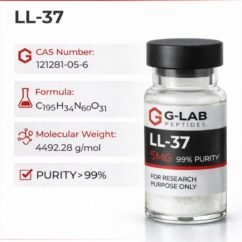 LL-37 (5mg)