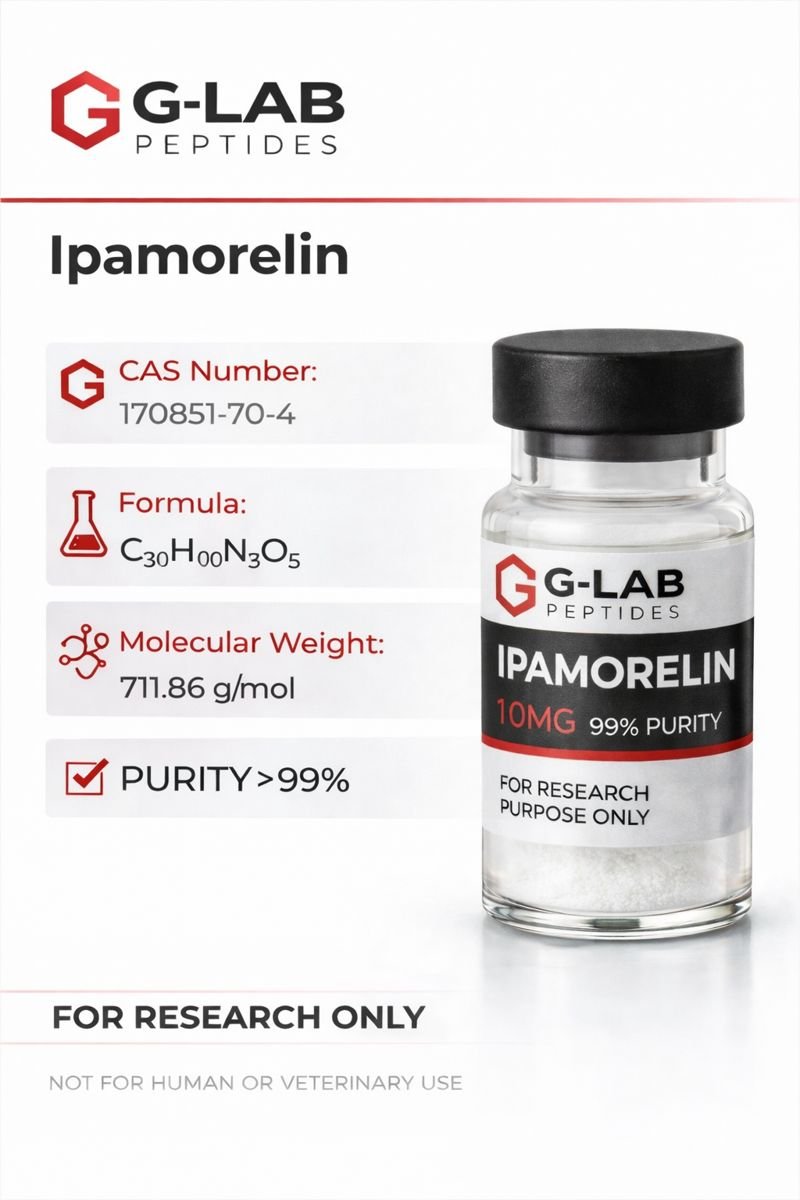
Ipamorelin (10mg)
$74.90
12 in stock
| Quantity | Discount | Price |
|---|---|---|
| 5 - 8 | 5% | $71.16 |
| 9+ | 10% | $67.41 |
Free shipping on orders over $200!
- Satisfaction Guaranteed
- No Hassle Refunds
- Secure Payments
Ipamorelin (10 mg) – Research Peptide
Ipamorelin is a highly selective growth hormone secretagogue (GHS) and agonist of the ghrelin receptor (GHSR-1a).
Its high specificity, minimal off-target hormonal activation, and clean signaling profile make it widely used in experimental research involving GH dynamics, cellular regeneration, musculoskeletal biology, gastrointestinal function, and neuroendocrine studies.
Specifications
Synonyms: Ipamorelin, NNC-26-0161
Molecular Formula: C₃₈H₄₉N₉O₅
Molecular Weight: 711.86 Da
Class: Growth hormone secretagogue / GHSR-1a agonist
Sequence: Aib-His-D-2-Nal-D-Phe-Lys-NH₂
Mechanism of Action
Ipamorelin works by selectively stimulating GHSR-1a, triggering GH release through:
Activation of hypothalamic GH-releasing pathways
Inhibition of somatostatin release, the primary GH suppressant
Stimulation of pituitary somatotrophs, increasing pulsatile GH secretion
Minimal impact on ACTH, cortisol, or prolactin, unlike many other GHRPs
Selective GHSR-1a Agonism
Comparative studies show Ipamorelin has:
Lower corticotropin release vs. GHRP-6 and hexarelin
Minimal effect on aldosterone, prolactin, luteinizing hormone
A clean GH-specific profile suitable for mechanistic research
(Raun et al., Novo Nordisk Studies)
Ipamorelin and Growth Hormone Signaling
Ipamorelin increases circulating GH, which activates:
JAK2 → STAT5
MAPK/ERK
PI3K → Akt → mTOR pathways
These pathways modulate:
Muscle protein synthesis
Cell growth
Tissue regeneration
Fat metabolism
1. Muscle Biology
GH-driven IGF-1 production affects:
Satellite cell activation
Muscle fiber hypertrophy
Recovery after overload or injury
Animal studies show GH secretagogues can enhance collagen turnover and muscle anabolism.
2. Bone & Connective Tissue
GH/IGF-1 axis research shows:
Increased osteoblast proliferation
Enhanced bone matrix deposition
Support for tendon/ligament remodeling in injury models
3. Anti-Catabolic Effects
In preclinical models, GH secretagogues:
Attenuated muscle wasting
Reduced proteolysis in catabolic states
Improved nitrogen balance
Ipamorelin in Metabolic Research
GH signaling significantly affects metabolic homeostasis. Research models demonstrate:
Fat Metabolism
GH increases:
Lipolysis
Fatty-acid mobilization
β-oxidation
Glucose Regulation
Although GH can temporarily raise glucose, studies indicate ipamorelin itself does not directly impair glucose tolerance.
Neuroendocrine and CNS Studies
The ghrelin receptor (GHSR-1a) is widely expressed in:
Hypothalamus
Pituitary
Reward centers
Vagal afferents
Potential research effects include:
Appetite modulation
Neuroprotection
Stress-axis regulation
Rodent studies show GHSR activation may support neuronal survival and synaptic plasticity.
Gastrointestinal Motility
Ghrelin mimetics (including ipamorelin) stimulate:
Gastric emptying
GI motility
Vagal pathways
This is relevant in research on postoperative ileus and motility disorders.
Comparative Selectivity vs. Other GHRPs
| Peptide | GH Increase | Cortisol | Prolactin | Appetite | Notes |
|---|---|---|---|---|---|
| Ipamorelin | High | Minimal | Minimal | Mild | Most selective |
| GHRP-6 | High | High | Moderate | Strong | Less selective |
| Hexarelin | Very high | Moderate | High | Mild | Potent but less selective |
Ipamorelin is the cleanest experimental GHRP with lowest hormonal spillover.
Other Experimental Applications
Tissue Regeneration
GH/IGF-1 signaling is implicated in:
Wound healing
Tendon recovery
Postoperative muscle retention
Aging Research
GH dynamics decline with age; models use ipamorelin to study:
Sarcopenia
Bone loss
Declining GH pulse amplitude
Sleep & Circadian Rhythm
GH is primarily released during sleep; secretagogues enable study of GH–sleep interactions.
Research Use Only – Important Notice
This Ipamorelin 10 mg product is supplied exclusively for laboratory research.
Not for human or veterinary use
Not for diagnostic, therapeutic, or cosmetic purposes
Intended for in vitro and controlled animal-model research only
All descriptions summarize preclinical findings
Not to be interpreted as medical advice
References
Raun K et al. Ipamorelin, a novel GH secretagogue: selectivity profile and endocrine effects. European Journal of Endocrinology.
https://doi.org/10.1530/eje.0.1390445Ghigo E et al. Growth hormone-releasing peptides and GH secretagogues: mechanisms and clinical applications. Endocrine Reviews.
https://doi.org/10.1210/edrv.18.4.0306van der Lely AJ et al. Ghrelin and its receptor in GH regulation. Nature Clinical Practice Endocrinology & Metabolism.
https://doi.org/10.1038/ncpendmet0197Zizzari P et al. Central effects of ghrelin on appetite and pituitary hormones. Neuroscience Letters.
https://doi.org/10.1016/S0304-3940(03)00944-8Granado M et al. Ghrelin’s impact on bone physiology. Growth Hormone & IGF Research.
https://doi.org/10.1016/j.ghir.2005.12.002Tsolakis AV et al. Ghrelin receptor distribution and implications for neuroendocrine function. Regulatory Peptides.
https://doi.org/10.1016/j.regpep.2004.11.006Chance WT et al. GHSR agonists improve gastric motility in postoperative models. Surgical Endoscopy.
https://doi.org/10.1007/s00464-012-2585-4
Related products
Tesamorelin
Price range: $86.90 through $115.00Select options This product has multiple variants. The options may be chosen on the product page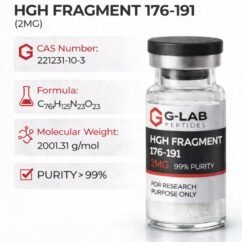
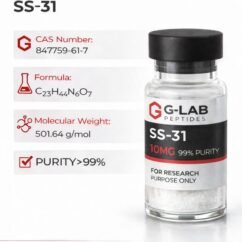
SS-31
Price range: $65.00 through $210.00Select options This product has multiple variants. The options may be chosen on the product page
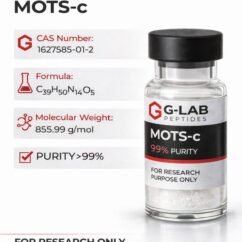
MOTS-c
Price range: $76.90 through $155.00Select options This product has multiple variants. The options may be chosen on the product page