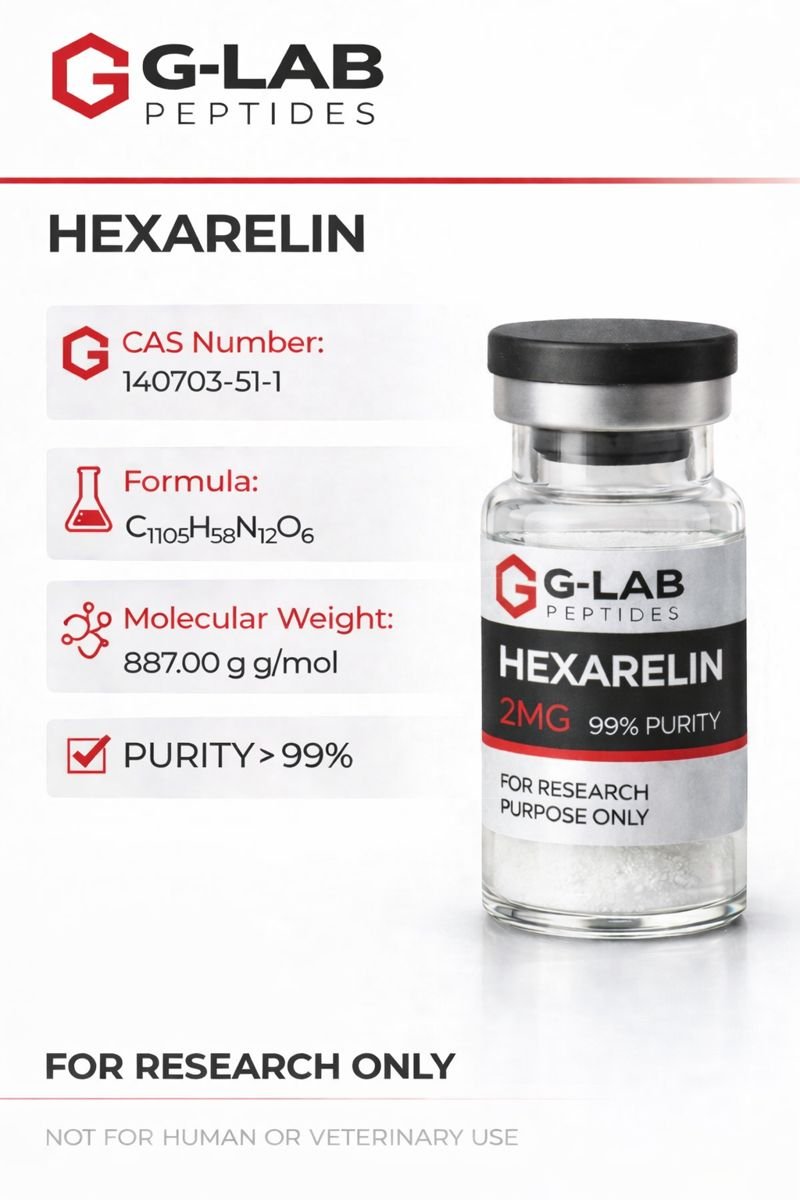
Hexarelin (2mg)
$57.69
| Quantity | Discount | Price |
|---|---|---|
| 5 - 8 | 5% | $54.81 |
| 9+ | 10% | $51.92 |
Free shipping on orders over $200!
- Satisfaction Guaranteed
- No Hassle Refunds
- Secure Payments
Hexarelin Peptide (2 mg)
Growth Hormone Secretagogue / GHSR-1a Agonist
Hexarelin (His-D-2-Me-Trp-Ala-Trp-D-Phe-Lys-NH₂) is a synthetic hexapeptide and potent agonist of the growth hormone secretagogue receptor type 1a (GHSR-1a), part of the ghrelin receptor family. It is widely used in experimental endocrinology to probe GH release mechanisms, cardiac physiology, and tissue-repair signaling pathways.
Compared to natural ghrelin or first-generation GHRPs, Hexarelin demonstrates high receptor affinity, strong GH-releasing activity, and notable cardioprotective and myotropic effects in preclinical research models.
Specifications
Synonyms: Examorelin, Hexarelin Acetate, HEX
Sequence: H-His-D-2-Me-Trp-Ala-Trp-D-Phe-Lys-NH₂
Molecular formula: C₄₇H₅₈N₁₂O₆
Molecular weight: 887.04 g/mol
Class: Growth hormone secretagogue / GHSR-1a agonist
Research areas: GH axis, muscle physiology, cardioprotection, tissue repair, lipid and glucose metabolism
Mechanism of Action and GHSR-1a Signaling
Hexarelin binds selectively to GHSR-1a, activating intracellular PLC/PKC pathways, elevating intracellular Ca²⁺, and stimulating growth hormone release from pituitary somatotrophs.
Research shows that Hexarelin:
Produces robust GH pulse stimulation superior to GHRP-6 in matched-dose assays
Desensitizes slowly, supporting repeated-dose research paradigms
Activates non-pituitary GHSR receptors present in heart, vasculature, immune cells and skeletal muscle
Triggers expression changes in anabolic, cardioprotective, and anti-apoptotic gene networks
A notable difference from ghrelin is that Hexarelin does not significantly stimulate appetite, allowing isolated study of GH and GHSR-mediated metabolic pathways.
Hexarelin and Muscle Physiology
Experimental studies indicate that Hexarelin:
Enhances IGF-1 expression in skeletal muscle
Increases myocyte proliferation and differentiation in vitro
Protects against catabolic signaling (myostatin, ubiquitin–proteasome pathways)
Reduces muscle-fiber apoptosis and oxidative stress markers
Promotes lean mass accrual in GH-deficient and healthy animal models
These findings support its use as a research tool in muscle repair, hypertrophy signaling, sarcopenia, cachexia, and disuse atrophy studies.
Cardiovascular Research and Ischemia Models
Hexarelin has been extensively evaluated for cardiac GHSR activation, with multiple studies demonstrating:
Improved left-ventricular systolic function in ischemia–reperfusion models
Reduced infarct size and myocardial fibrosis
Lower cardiomyocyte apoptosis (via Bcl-2/Bax modulation and caspase inhibition)
Enhanced endothelial nitric oxide (NO) bioavailability
Protection against angiotensin II-induced cardiomyocyte dysfunction
Hexarelin also stimulates GH-independent cardioprotective signaling, making it valuable for dissecting GHSR pathways not mediated solely by GH or IGF-1.
Hexarelin, Lipid Metabolism and Glucose Regulation
Animal research has shown:
Reduced total cholesterol and triglycerides in high-fat-diet models
Enhanced glucose uptake in skeletal muscle
Improved insulin sensitivity through PI3K/Akt pathway modulation
Lower visceral adiposity through GH/IGF-1–mediated lipolytic signaling
These outcomes position Hexarelin as a mechanistic research tool in metabolic-syndrome, obesity, and dyslipidemia models.
Inflammation, Tissue Repair and Cellular Protection
Hexarelin exhibits anti-inflammatory and cytoprotective actions:
Suppression of TNF-α, IL-6 and NF-κB activity
Reduced oxidative stress (lower MDA, higher SOD and GSH)
Attenuation of fibrosis in cardiac and hepatic tissue
Upregulation of reparative pathways in connective tissue
These findings support its utility in models of organ injury, fibrosis, wound healing, and systemic inflammation.
Other Experimental Applications
Bone metabolism
Hexarelin enhances osteoblast activity and mineral deposition in vitro and counters glucocorticoid-induced bone loss.
Aging and frailty
GH/IGF-1 restoration and mitochondrial improvements have been observed in aging rodent models.
Neurological studies
Hexarelin shows neuroprotective potential in models of oxidative stress and β-amyloid toxicity.
Research Use Only – Important Notice
This Hexarelin 2 mg product is supplied exclusively for laboratory research:
Not for human or veterinary use
Not for diagnostic, therapeutic, or cosmetic application
For controlled in vitro or in vivo studies by qualified professionals only
Descriptions summarize findings from preclinical literature and must not be interpreted as medical claims
References
1. Li Y. et al. Hexarelin attenuates myocardial ischemia–reperfusion injury by reducing apoptosis in cardiomyocytes.
https://pubmed.ncbi.nlm.nih.gov/26070763/
2. Xu X. et al. Hexarelin improves cardiac function and reduces fibrosis in heart-failure models.
https://pubmed.ncbi.nlm.nih.gov/29717860/
3. Locatelli V. et al. Growth hormone secretagogues and muscle: GH-dependent and GH-independent effects.
https://pubmed.ncbi.nlm.nih.gov/11786696/
4. Baldanzi G. et al. Hexarelin activates cardioprotective signaling through GHS-R independent pathways.
https://pubmed.ncbi.nlm.nih.gov/12176868/
5. Bresciani E. et al. Metabolic effects of growth hormone secretagogues on glucose and lipid metabolism.
https://pubmed.ncbi.nlm.nih.gov/21544068/
6. Granata R. et al. Anti-apoptotic and anti-inflammatory effects of Hexarelin in cardiac cells.
https://pubmed.ncbi.nlm.nih.gov/15159138/
7. Wang L. et al. Hexarelin promotes osteogenesis and inhibits glucocorticoid-induced bone loss.
https://pubmed.ncbi.nlm.nih.gov/28427715/
Related products
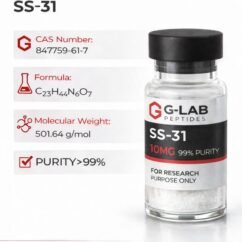
SS-31
Price range: $65.00 through $210.00Select options This product has multiple variants. The options may be chosen on the product page
GHK-Cu
Price range: $58.90 through $81.90Select options This product has multiple variants. The options may be chosen on the product page