
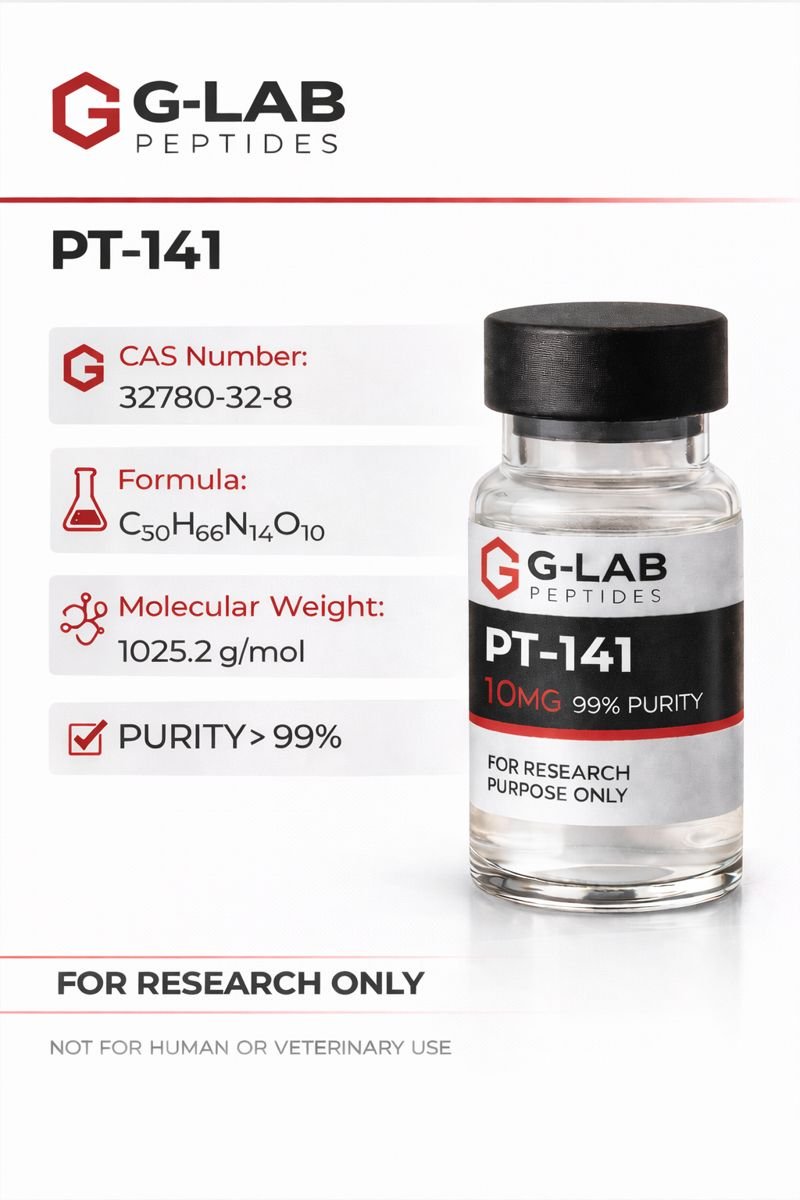
PT-141 (Bremelanotide)
$59.90
| Quantity | Discount | Price |
|---|---|---|
| 5 - 8 | 5% | $56.91 |
| 9+ | 10% | $53.91 |
Free shipping on orders over $200!
- Satisfaction Guaranteed
- No Hassle Refunds
- Secure Payments
PT-141 (Bremelanotide) – Research Peptide
PT-141, also known as Bremelanotide, is a synthetic cyclic heptapeptide derived from α-melanocyte-stimulating hormone (α-MSH). It is a potent agonist of melanocortin receptors, primarily MC3R and MC4R, and is widely used in experimental research focused on sexual behavior, neuroendocrine signaling, motivation, mood, and central nervous system (CNS) pathways.
Unlike PDE-5 inhibitors or peripheral vasodilators, PT-141 acts centrally, modulating neural circuits in the hypothalamus and limbic system rather than acting directly on vascular smooth muscle.
Specifications
Synonyms: PT-141, Bremelanotide
Peptide class: Melanocortin receptor agonist
Primary receptors: MC3R, MC4R
Molecular formula: C₅₀H₆₈N₁₄O₁₀
Molecular weight: ~1,025.2 g/mol
Structure: Cyclic peptide (α-MSH analog)
Research domains: Neuroendocrinology, sexual behavior, motivation, CNS signaling, melanocortin biology
Mechanism of Action – Central Melanocortin Signaling
PT-141 activates melanocortin receptors in the brain, particularly MC4R, leading to downstream signaling through:
cAMP/PKA pathways
Hypothalamic dopamine modulation
Limbic system activation
Reduced inhibitory serotonergic tone
This results in enhanced sexual motivation and arousal independent of nitric-oxide–mediated vasodilation.
Key mechanistic features:
Acts centrally, not peripherally
Does not require sexual stimulation to activate pathways
Bypasses vascular mechanisms
Minimal effect on testosterone or estrogen levels
PT-141 and Sexual Behavior Research
Male Models
Experimental and clinical research demonstrates that PT-141:
Enhances sexual desire and initiation behavior
Improves erectile response via central pathways
Activates hypothalamic nuclei involved in sexual motivation
Female Models
PT-141 is extensively studied for:
Female sexual arousal disorder (FSAD) models
Hypoactive sexual desire pathways
Central arousal independent of genital blood flow
Functional imaging studies show activation of the hypothalamus and limbic structures following PT-141 exposure.
Neuroendocrine and CNS Effects
PT-141 modulates several CNS systems:
Dopaminergic Pathways
Enhances dopamine signaling linked to motivation and reward
Influences mesolimbic circuits
Serotonergic Modulation
Reduces inhibitory serotonergic tone associated with sexual suppression
Stress and Mood Signaling
MC4R involvement suggests overlap with stress-response and mood regulation networks
These properties make PT-141 useful for studying motivation, reward processing, and neurobehavioral integration.
PT-141 vs Peripheral Erectile Pathways
| Feature | PT-141 | PDE-5 inhibitors |
|---|---|---|
| Site of action | Central (CNS) | Peripheral (vascular) |
| Nitric oxide dependent | No | Yes |
| Requires sexual stimulation | No | Yes |
| Hormonal alteration | Minimal | None |
| Appetite/MC pathways | Yes | No |
This distinction explains PT-141’s use as a central neurobehavioral research compound rather than a vascular agent.
Other Experimental Applications
Researchers also use PT-141 in studies involving:
Melanocortin receptor mapping
Appetite and energy-balance signaling (MC3R/MC4R overlap)
CNS receptor desensitization and tolerance models
Sexual behavior in stress or SSRI-exposed models
Research Use Only – Important Notice
This PT-141 product is supplied exclusively for laboratory research purposes.
Not for human or veterinary use
Not for diagnostic, therapeutic, or cosmetic applications
Intended only for in vitro studies or controlled experimental animal models
All descriptions summarize preclinical and mechanistic research and do not constitute medical claims
References
King SH et al. Central melanocortin receptors and sexual behavior. J Neurosci.
https://pubmed.ncbi.nlm.nih.gov/15659638/Wessells H et al. Melanocortin receptor agonists in erectile and sexual function research. J Urol.
https://pubmed.ncbi.nlm.nih.gov/14767286/Clayton AH et al. Bremelanotide: a centrally acting melanocortin receptor agonist. J Sex Med.
https://pubmed.ncbi.nlm.nih.gov/19090890/Pfaus JG et al. Dopamine and sexual motivation: central pathways. Behav Brain Res.
https://pubmed.ncbi.nlm.nih.gov/17574679/Hadley ME, Haskell-Luevano C. The proopiomelanocortin system and melanocortin receptors. Endocr Rev.
https://pubmed.ncbi.nlm.nih.gov/16174816/Safarinejad MR. Neuroendocrine control of sexual function. Urol J.
https://pubmed.ncbi.nlm.nih.gov/20311445/
Related products
GHK-Cu
Price range: $58.90 through $81.90Select options This product has multiple variants. The options may be chosen on the product page
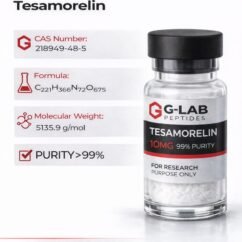
Tesamorelin
Price range: $86.90 through $115.00Select options This product has multiple variants. The options may be chosen on the product page
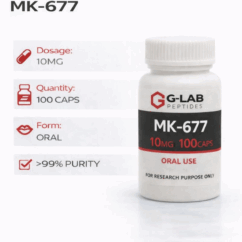 MK-677 (10mg)
  IGF-1 LR3 (1mg)