
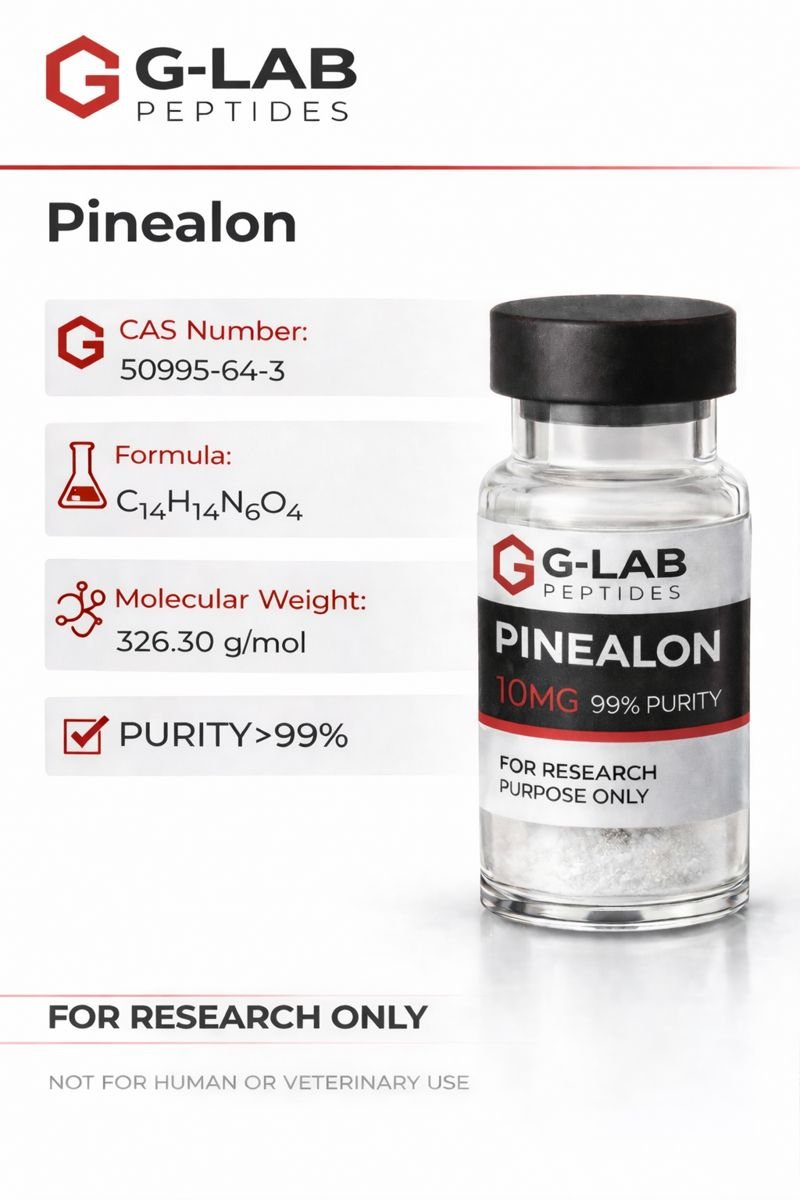
Pinealon (10mg)
$76.90
| Quantity | Discount | Price |
|---|---|---|
| 5 - 8 | 5% | $73.06 |
| 9+ | 10% | $69.21 |
Free shipping on orders over $200!
- Satisfaction Guaranteed
- No Hassle Refunds
- Secure Payments
Pinealon (10 mg)
Pinealon (also known as EDR peptide) is a synthetic ultrashort tripeptide with the sequence Glu–Asp–Arg (H-Glu-Asp-Arg-OH). It is classified in the Russian bioregulator literature as a neuroprotective, geroprotective peptide that can modulate oxidative stress, gene expression, and neuronal survival in experimental models of brain aging, metabolic stress and prenatal brain injury. PubChem+2Core Peptides+2
Preclinical and small human studies suggest that Pinealon may:
Suppress reactive oxygen species (ROS) and support antioxidant defenses
Influence cell-cycle and proliferative pathways in neural and non-neural cells
Improve learning and memory in rodent models of prenatal hyperhomocysteinemia and experimental diabetes
Act as a potential “geroprotective” modulator in elderly patients with organic brain syndrome (according to Russian gerontology data) Khavinson+4PubMed+4PubMed+4
Pinealon is not an approved drug in the US, EU or other major jurisdictions and is supplied only as a research peptide by reputable vendors. Pure Health Peptides+2PARTICLE, s. r. o.+2
Specifications
Synonyms: Pinealon, EDR peptide, Glu–Asp–Arg, H-Glu-Asp-Arg-OH
Sequence: Glutamic acid – Aspartic acid – Arginine (Glu–Asp–Arg) PubChem+1
Molecular formula: C₁₅H₂₆N₆O₈ PubChem+2Core Peptides+2
Molecular weight: ~418.2 g/mol Core Peptides+1
Class:
Ultrashort neuroprotective / geroprotective tripeptide bioregulator (CNS-focused peptide, oxidative-stress and gene-expression modulator) Khavinson+3MDPI+3PubMed+3
Presentation (research grade):
Lyophilized powder, 10 mg per vial (composition and excipients per batch COA). Reconstitution and working concentrations are protocol-dependent and must follow local laboratory SOPs. Pure Health Peptides+2PARTICLE, s. r. o.+2
Mechanism of Action and Cellular Signaling
Antioxidant and anti-radical actions
The best-characterized mechanism comes from in vitro cell studies:
Khavinson et al. (Rejuvenation Research, 2011) showed that Pinealon dose-dependently reduced intracellular ROS, increased cell viability, and activated proliferative processes across several cell types, including neuronal cultures. PubMed+2Liebert Publishing+2
Vendor and technical summaries based on this work describe Pinealon as preventing ROS accumulation, supporting antioxidant enzyme activity, and reducing spontaneous cell death under oxidative stress. Biocat+2MedChemExpress+2
These data position Pinealon as a tool compound to study how ultrashort peptides can modulate redox balance and cell survival.
Gene-expression and epigenetic modulation
A broader mechanistic picture comes from the “EDR peptide” literature:
Khavinson et al. (Molecules, 2020) review evidence that the EDR peptide regulates expression of genes involved in apoptosis, antioxidant defense and synaptic function, including modulation of ERK1/2 signaling relevant to Alzheimer-type neurodegeneration. PMC+1
In neuronal models, Pinealon has been reported to normalize lipid peroxidation, enhance antioxidant systems, and preserve neuronal viability under hypoxic or toxic stress. Biocat+2Biotech Peptides+2
Together, these findings suggest Pinealon acts at the level of gene expression and intracellular signaling pathways that determine cell fate under stress, particularly in CNS tissues.
Pinealon, Oxidative Stress and Cell Viability
The foundational Rejuvenation Research study by Khavinson et al. provides key quantitative data: PubMed+2Liebert Publishing+2
Pinealon (Glu–Asp–Arg) was applied to rat cerebellar granule cells and other cell types exposed to oxidative stress.
The peptide reduced ROS levels and increased cell viability in a dose-dependent manner.
It also stimulated proliferative processes, interpreted as a partial restoration of normal cell-cycle activity under damaging conditions.
Secondary technical summaries (MedChemExpress, Biocat, etc.) echo these findings, emphasizing: Core Peptides+3Biocat+3MedChemExpress+3
Suppression of free radicals
Improved survival of neuronal and non-neuronal cells
Potential antihypoxic properties in brain-tissue models
This makes Pinealon a useful in vitro tool for exploring redox biology, neuronal survival and peptide-based cytoprotection.
Prenatal Hyperhomocysteinemia and Neurodevelopment
One of the most cited experimental models for Pinealon is prenatal hyperhomocysteinemia:
Arutjunyan et al. (Int J Clin Exp Med, 2012) exposed pregnant rats to methionine-induced hyperhomocysteinemia, creating oxidative stress and neurodevelopmental impairment in offspring. PubMed+2ResearchGate+2
Pinealon (Glu–Asp–Arg) given to the dams under these conditions:
Improved spatial orientation and learning in the offspring (Morris water-maze performance)
Reduced ROS accumulation in cerebellar neurons
Decreased the proportion of necrotic neurons, indicating enhanced resistance to oxidative injury
Subsequent reviews of prenatal hyperhomocysteinemia as a brain oxidative-stress model explicitly highlight this Pinealon study as evidence of peptide-mediated protection of developing neural tissue. MDPI+2SpringerLink+2
Experimental Diabetes, NMDA Receptors and Learning
Pinealon has also been studied in a diabetic cognitive-impairment model:
Karantysh et al. (Neurochemical Journal, 2020) examined the Effect of Pinealon on Learning and Expression of NMDA Receptor Subunit Genes in the Hippocampus of Rats with Experimental Diabetes. SpringerLink+2SpringerLink+2
In this study:
Rats were trained in the Morris water maze, then rendered diabetic and observed for memory retention.
Pinealon at 50–200 ng/kg improved retention of the learned task, with shorter latency to find the platform compared with untreated diabetic controls.
Molecular analysis showed modulation of NMDA receptor subunit expression in the hippocampus (e.g., changes in NR2-containing subunits) consistent with preserved synaptic plasticity.
These findings support Pinealon as a probe for synaptic plasticity and glutamatergic signaling under metabolic stress conditions.
Geroprotection, Cognitive Function and Clinical Gerontology Data
A series of Russian gerontology studies has examined Pinealon as a “geroprotective” peptide in elderly patients:
Meshchaninov et al. (Advances in Gerontology / Uspekhi Gerontologii, 2015) reported that the short peptides Pinealon and Vesugen were recommended as geroprotectors of anabolic, neuroprotective and antioxidant type for elderly patients with chronic multimorbidity and organic brain syndrome in remission. PubMed+1
The same work noted that Pinealon and Vesugen did not alter chromatin condensation, interpreted as an absence of detectable genotoxic effects in their assays. PubMed+1
A broader review of geroprotective peptides by Khavinson et al. describes improved memory, reduced headache frequency and more balanced emotional state in patients receiving Pinealon as part of long-term peptide regimens alongside standard care. Khavinson+1
These human data are small, mostly Russian, and not widely replicated in large randomized trials, but they underpin Pinealon’s classification as a candidate geroprotective neuropeptide in that literature.
Cellular Aging, Sleep and Circadian-Related Research
Beyond classical neuroprotection, newer overviews propose that Pinealon may:
Support cellular “rejuvenation” by modulating gene networks involved in DNA repair, antioxidant defense and mitochondrial function, with suggested impacts on cell viability and senescence markers. Core Peptides+3MDPI+3Enhanced Wellness NY+3
Influence the sleep–wake cycle and circadian behavior in animal models, potentially mitigating the cellular consequences of chronically disturbed sleep, though these findings are early and largely preclinical. Core Peptides+1
Most of this work is hypothesis-generating and should be interpreted as exploratory research, not as proof of clinical benefits.
Other Experimental Applications
Pinealon is also used as a research tool to:
Examine short peptide penetration across the blood–brain barrier and cellular/nuclear membranes. Core Peptides+2Core Peptides+2
Study neuronal regeneration and peptide-based neurorepair, as reflected in a patent describing Glu–Asp–Arg as a stimulator of neuronal regeneration in models of brain and spinal cord trauma, hypoxia and clinical brain injury. Google Patents+1
Serve as a comparator peptide in broader work on tripeptide bioregulators and epigenetic control of brain aging and neurodegenerative disease. MDPI+1
Regulatory Status and Limitations of Evidence
Not an approved medicine:
Pinealon is not approved by the FDA, EMA or other major regulators for any indication. It is sold by specialty vendors explicitly as a research chemical / bioregulator. Pure Health Peptides+2PARTICLE, s. r. o.+2Limited clinical data:
Human data consist mainly of small, mostly Russian studies in geriatric and neurotrauma populations, often with open-label or limited control designs. High-quality, large randomized trials in broader populations are lacking. PubMed+2Khavinson+2Uncertain long-term safety:
While short-term studies report good tolerability and no obvious genotoxic signal (no change in chromatin condensation), long-term safety and carcinogenicity have not been rigorously established. PubMed+2PubMed+2
For these reasons, Pinealon should be treated strictly as an experimental research peptide, not as a validated therapeutic.
Research Use Only – Important Notice
This Pinealon (10 mg) product is supplied exclusively for laboratory research purposes.
Not for human or veterinary use
Not for diagnostic, therapeutic, anti-aging, cognitive-enhancement, or cosmetic applications
Intended only for in vitro studies and/or appropriately controlled animal experiments conducted by qualified professionals
All descriptions above summarize findings from preclinical models and limited early clinical/gerontology reports.
They must not be interpreted as medical claims, dosing guidance, or any recommendation for self-administration or clinical treatment.
References
Khavinson V. et al. Pinealon Increases Cell Viability by Suppression of Free Radical Levels and Activating Proliferative Processes. Rejuvenation Res. 2011;14(5):535–541. PubMed+1
Arutjunyan A. et al. Pinealon Protects the Rat Offspring from Prenatal Hyperhomocysteinemia. Int J Clin Exp Med. 2012;5(2):179–185. PubMed+1
Karantysh G.V. et al. Effect of Pinealon on Learning and Expression of NMDA Receptor Subunit Genes in the Hippocampus of Rats with Experimental Diabetes. Neurochem J. 2020;14:314–320. SpringerLink+1
Khavinson V. et al. EDR Peptide: Possible Mechanism of Gene Expression and Protein Synthesis Regulation Involved in the Pathogenesis of Alzheimer’s Disease. Molecules. 2020. PMC+1
Meshchaninov V.N. et al. Effect of Synthetic Peptides on Aging of Patients with Chronic Polymorbidity and Organic Brain Syndrome of the CNS in Remission. Adv Gerontol. 2015. PubMed+1
Khavinson V. et al. GDF11 Protein as a Geroprotector. Biology Bulletin Reviews. 2016 (includes clinical observations with Pinealon as a geroprotective peptide). Khavinson
PubChem CID 10273502. Glu–Asp–Arg (Pinealon) – Compound Summary. U.S. National Library of Medicine. PubChem
MedChemExpress / TargetMol / Biocat technical data sheets for Pinealon (HY-P4052, T76536) – peptide identity, formula C₁₅H₂₆N₆O₈, MW ≈ 418.2, ROS and antioxidant summaries. Chengdu YoungShe Chemical Co., Ltd+4Biocat+4MedChemExpress+4
Bench and vendor reviews summarizing Pinealon research in neuroprotection, sleep/circadian regulation and cellular aging. Core Peptides+2Biotech Peptides+2
US Patent US8524674B2. Method of Improving the Conditioned Reflex Habit and Neuronal Regeneration Using Glu–Asp–Arg. Google Patents
Related products
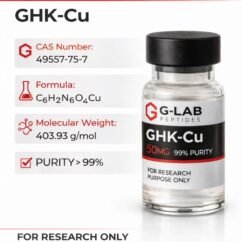
GHK-Cu
Price range: $58.90 through $81.90Select options This product has multiple variants. The options may be chosen on the product page
MOTS-c
Price range: $76.90 through $155.00Select options This product has multiple variants. The options may be chosen on the product page
 Melanotan 1 (10mg)