
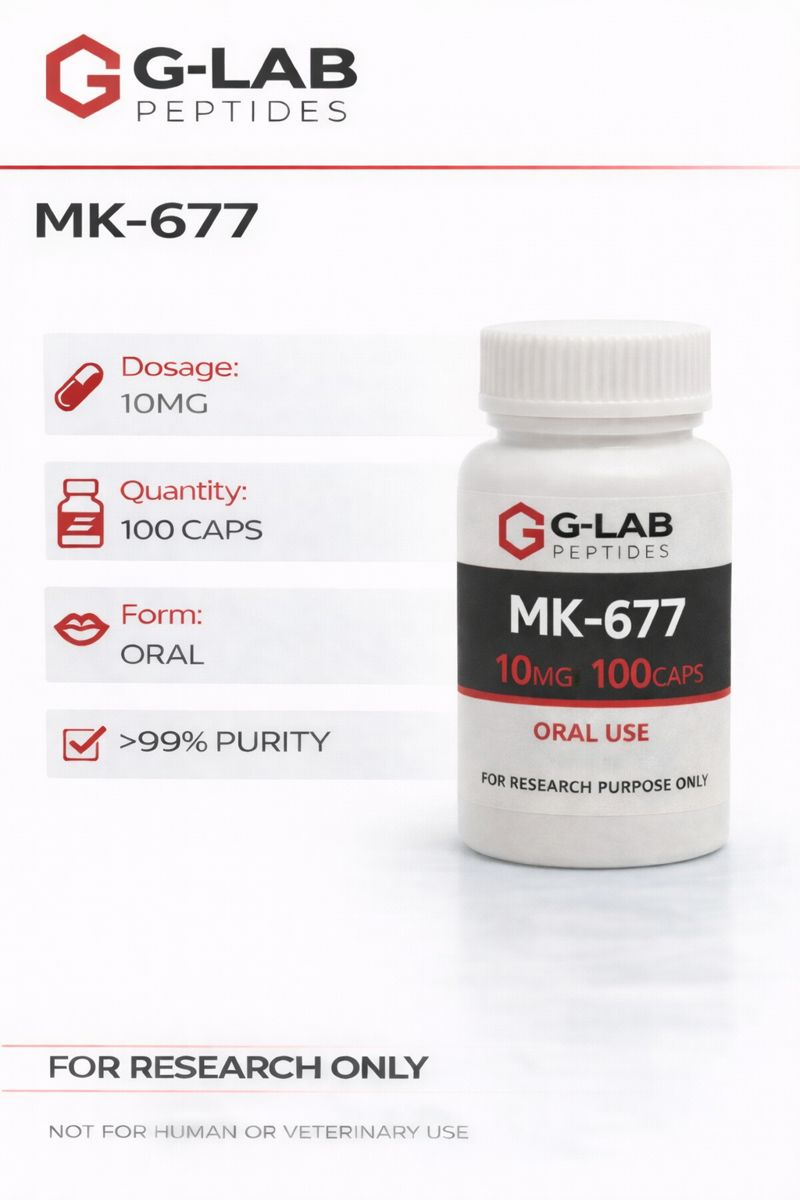
MK-677 (10mg)
$103.90
| Quantity | Discount | Price |
|---|---|---|
| 5 - 8 | 5% | $98.71 |
| 9+ | 10% | $93.51 |
Free shipping on orders over $200!
- Satisfaction Guaranteed
- No Hassle Refunds
- Secure Payments
GH / IGF Research
MK-677 (10 mg)
Non-Peptide Ghrelin Receptor Agonist / Growth Hormone Secretagogue (GHSR-1a)
MK-677 (also known as Ibutamoren) is a potent, orally active, non-peptide agonist of the Growth Hormone Secretagogue Receptor (GHSR-1a) — the same receptor activated by endogenous ghrelin and synthetic GHRP peptides (e.g., GHRP-2, GHRP-6, Hexarelin).
Unlike peptide GH secretagogues, MK-677 is:
Orally bioavailable
Long-acting (half-life ~24 hours)
Capable of producing sustained increases in GH, IGF-1, and IGFBP-3
Because of these properties, MK-677 is widely used for research in:
GH/IGF-1 axis physiology
Muscle wasting & sarcopenia models
Bone density & fracture healing
Sleep architecture & circadian GH release
Metabolic and appetite-regulation studies
Aging, regeneration, and neuroendocrine decline
MK-677 (10 mg) is provided strictly for laboratory research and not for human consumption.
Specifications
Synonyms: MK-677, Ibutamoren, L-163,191, Oratrope
Class: Non-peptide GHSR-1a agonist / GH secretagogue
Molecular Formula: C₂₇H₃₆N₄O₅S
Molecular Weight: ~528.7 g/mol
Presentation: 10 mg research-grade compound (≥98% purity)
Mechanism of Action & Endocrine Signaling
MK-677 binds selectively to GHSR-1a receptors, activating the same intracellular signaling cascade triggered by ghrelin and peptide GHRPs.
1. GHSR-1a activation
Binding stimulates:
↑ IP₃ and intracellular Ca²⁺
↑ PKC activation
↑ GH release from pituitary somatotrophs
Inhibition of somatostatin (GH antagonist)
This produces a robust increase in:
Growth hormone (GH)
Insulin-like growth factor-1 (IGF-1)
IGF binding protein-3 (IGFBP-3)
2. Long-acting GH stimulation
Unlike peptides that produce sharp pulses, MK-677 maintains:
Sustained GH elevation for ~24 hours
Physiologic GH pulsatility (does not override rhythm entirely)
3. Ghrelin-mimetic actions
MK-677 acts on brain ghrelin receptors involved in:
Appetite regulation
Sleep cycle modulation
Energy balance
Growth hormone feedback loops
GH/IGF-1 Axis Research Effects
1. Muscle growth & anti-catabolic models
Experimental findings show:
Increased lean mass in GH-deficient models
Prevention of muscle wasting
Enhanced protein synthesis
Improved recovery from tissue damage
MK-677 is a major research tool in sarcopenia, cachexia, and aging muscle studies.
2. Bone density & fracture repair
IGF-1 is essential for bone remodeling. MK-677 research demonstrates:
Improved bone mineral density (BMD)
Accelerated fracture healing
Increased osteoblast activity
Reduced bone turnover markers associated with aging
3. Sleep architecture and neuroendocrine function
Because GH release is tied to deep sleep, MK-677 is used in studies investigating:
Increased REM and slow-wave sleep
Enhanced nighttime GH pulses
Age-related declines in endogenous GH secretion
4. Metabolic and endocrine modulation
MK-677 research shows:
Improved nitrogen retention
Reduced inflammatory markers
Increased basal metabolic rate
Enhanced fatty-acid oxidation
Appetite & Metabolic Regulation Research
As a ghrelin mimetic, MK-677 activates hypothalamic pathways involved in:
Appetite stimulation
Energy intake and expenditure
Glucose homeostasis
Insulin sensitivity (effects vary by model)
It is often used to study hunger signaling, energy balance, and endocrine obesity models.
Neuroprotective & Cognitive Research
IGF-1 is essential for brain health; MK-677–induced IGF-1 elevation supports research in:
Cognitive decline
Neurodegenerative models
Motor learning
Synaptic plasticity
Neurogenesis
MK-677 is also used to investigate neuroendocrine aging and pituitary feedback loops.
Comparison to Peptide GHRPs
| Property | MK-677 | Peptide GHRPs (Hexarelin, GHRP-2, etc.) |
|---|---|---|
| Delivery | Oral | Injectable |
| Half-life | ~24 hrs | Minutes |
| Appetite increase | Strong | Moderate/variable |
| GH elevation | Sustained | Pulsatile spike |
| Desensitization | Low | Moderate over time |
Safety, Limitations & Regulatory Notes
MK-677 is not FDA- or EMA-approved for any therapeutic use.
Research models report transient increases in appetite, water retention, and fasting glucose—important for study design.
Long-term IGF-1 elevation should be monitored in experimental settings.
Research-grade MK-677 is not for human or veterinary use and should not be used for bodybuilding, performance, or weight manipulation.
Research Use Only – Important Notice
This MK-677 (10 mg) material is supplied strictly for laboratory research.
Not for human consumption
Not for therapeutic, cosmetic, or diagnostic purposes
For in vitro and controlled animal model experimentation only
Descriptions summarize findings from endocrine, metabolic, and neurobiological literature
Not to be interpreted as medical or dosing guidance
References (peer-reviewed, non-Wikipedia)
Nass R et al. The GH-releasing effect of MK-677 in healthy adults. J Clin Endocrinol Metab.
https://pubmed.ncbi.nlm.nih.gov/9467531/
Murphy MG et al. MK-677 increases GH, IGF-1 and fat-free mass. J Clin Endocrinol Metab.
https://pubmed.ncbi.nlm.nih.gov/9079585/
Chapman IM et al. MK-677 improves sleep and GH secretion in elderly subjects. J Clin Endocrinol Metab.
https://pubmed.ncbi.nlm.nih.gov/9645672/
Svensson J et al. Metabolic and body composition effects of MK-677. J Clin Endocrinol Metab.
https://pubmed.ncbi.nlm.nih.gov/10022410/
Smith RG et al. GHSR-1a receptor signaling and ghrelin mimetics. Endocr Rev.
https://pubmed.ncbi.nlm.nih.gov/11588148/
Related products
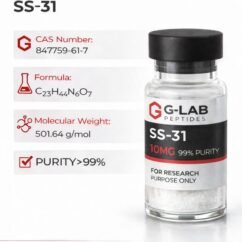
SS-31
Price range: $65.00 through $210.00Select options This product has multiple variants. The options may be chosen on the product page
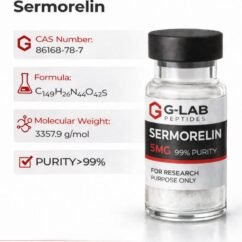
Sermorelin
Price range: $50.90 through $89.90Select options This product has multiple variants. The options may be chosen on the product page
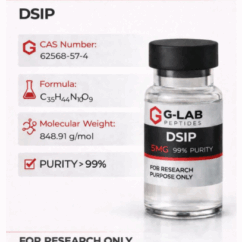 DSIP (5mg)
 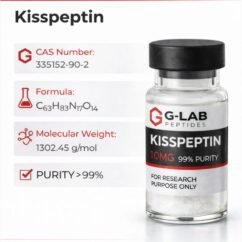 Kisspeptin (10mg)
 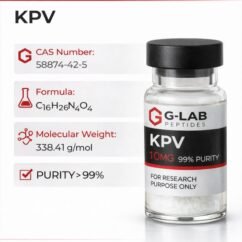 KPV (10mg)