
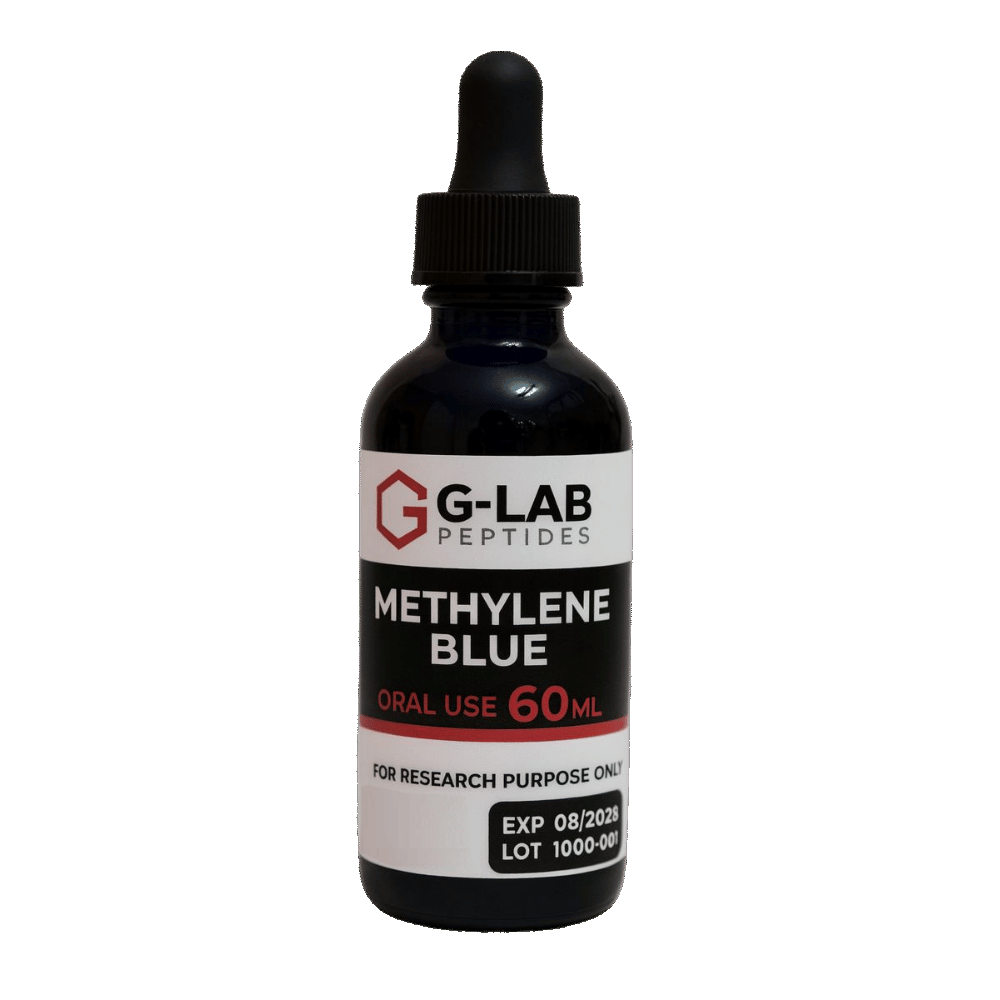
Methylene Blue (60ml)
$24.90
| Quantity | Discount | Price |
|---|---|---|
| 5 - 8 | 5% | $23.65 |
| 9+ | 10% | $22.41 |
Free shipping on orders over $200!
- Satisfaction Guaranteed
- No Hassle Refunds
- Secure Payments
Methylene Blue (MB)
Methylene Blue (MB; methylthioninium chloride) is a redox-active aromatic compound widely used in biomedical and cellular research for its ability to modulate mitochondrial respiration, enhance electron transport, influence redox cycling, and affect multiple neurobiological and metabolic pathways. Because of its reversible redox properties (MB ↔ leucomethylene blue), MB can bypass dysfunctional mitochondrial complexes, restore ATP generation, suppress oxidative stress, and modulate nitrogen-oxide signaling.
MB has been extensively studied as a tool to explore neuroprotection, mitochondrial bioenergetics, anti-inflammatory pathways, memory enhancement, cellular redox states, protein aggregation disorders, and ischemia–reperfusion injury.
Specifications
Synonyms: Methylthioninium chloride, Methylene blue, MB
Molecular Formula: C₁₆H₁₈ClN₃S·xH₂O
Molecular Weight: 319.85 g/mol (anhydrous base)
Class: Redox dye / Mitochondrial electron carrier / NO signaling modulator
Research Category: Neurobiology, mitochondrial physiology, redox biochemistry, inflammation
Mechanisms of Action and Redox Biology
1. Mitochondrial Electron Transport and ATP Restoration
Methylene Blue acts as an alternative electron carrier between complexes I–III and cytochrome c, allowing partial bypass of impaired complexes and improving mitochondrial efficiency.
Research shows that MB can:
Increase NAD⁺/NADH cycling
Improve oxygen consumption rate (OCR)
Enhance ATP production even in dysfunctional mitochondria
Reduce electron leakage and ROS formation
These effects make MB a valuable agent in studies of neurodegeneration, aging, and metabolic insufficiency.
2. Antioxidant and Cellular Protective Pathways
MB reduces oxidative stress not by direct scavenging but by supporting balanced mitochondrial redox cycling. Mechanisms include:
Lowering superoxide generation
Enhancing mitochondrial membrane potential
Increasing antioxidant enzyme expression (e.g., SOD2)
Reducing protein carbonylation and lipid peroxidation
These antioxidant mechanisms have been validated in neuronal, cardiac, and hepatic injury models.
3. Modulation of Nitric Oxide (NO), cGMP & Vasoreactivity
MB inhibits nitric oxide synthase (NOS) and guanylate cyclase pathways, making it a tool compound for:
Studying NO/cGMP-mediated vasodilation
Investigating distributive shock, inflammation, and endothelial dysfunction
Exploring vascular tone control and hemodynamic models
Its effects on NO signaling are especially useful in cardiovascular and sepsis research.
4. Neuroprotective & Cognitive Enhancement Mechanisms
MB influences multiple neurobiological pathways:
Enhances synaptic plasticity and memory retention (via mitochondrial support)
Reduces tau aggregation and amyloid toxicity
Modulates monoamine oxidase (MAO) activity
Protects neurons against hypoxic and metabolic stress
Low-dose MB is frequently used in studies of Alzheimer’s disease, traumatic brain injury, and cognitive enhancement.
5. Antimicrobial and Antiviral Properties
MB is widely studied for its broad-spectrum antimicrobial effects, involving:
Redox cycling damage to microbial membranes
Photodynamic activity under light exposure
Inhibition of viral replication pathways
Multiple studies confirm activity against bacteria, fungi, and certain enveloped viruses under controlled conditions.
Methylene Blue in Inflammation, Organ Injury, and Ischemia–Reperfusion
Cardiac and Tissue Protection
Experimental models show that MB can:
Reduce infarct size
Improve left ventricular recovery
Decrease inflammatory cytokines (IL-6, TNF-α)
Stabilize mitochondrial function in ischemic tissue
These effects are attributed to MB’s roles in metabolism, NO modulation, and redox homeostasis.
Methylene Blue in Protein Aggregation & Cellular Stress Studies
MB has unique properties in protein misfolding research:
Inhibits aggregation of tau and α-synuclein
Reduces proteotoxic stress
Enhances autophagic turnover
Protects ER and mitochondrial folding machinery
These features make MB a powerful tool for neurodegenerative-disease research.
Other Experimental Applications
Imaging and histological staining
Photodynamic therapy research
Cellular oxygen-sensing studies
Mitochondrial metabolic assays
Studies of cognitive enhancement and memory consolidation
Sepsis and shock physiology models
Research Use Only – Important Notice
This Methylene Blue product is supplied exclusively for laboratory research.
Not for human or veterinary use
Not for diagnostic, therapeutic, or cosmetic purposes
For controlled in vitro and experimental animal studies only
All descriptions summarize results from scientific research and are not medical claims
References
1. Wen Y. et al. Methylene Blue Improves Mitochondrial Function and Reduces Oxidative Stress in Models of Neurodegeneration. Neurobiology of Aging, 2011.
https://pubmed.ncbi.nlm.nih.gov/20851020/
2. Atamna H., Nguyen A. Methylene Blue as an Electron Carrier to Improve Mitochondrial Metabolism. Journal of Biological Chemistry, 2004.
https://pubmed.ncbi.nlm.nih.gov/14742437/
3. Lindahl M. et al. Redox Cycling of Methylene Blue Protects Against Cellular Stress and Enhances ATP Production. Aging Cell, 2013.
https://pubmed.ncbi.nlm.nih.gov/23331497/
4. Schirmer R. et al. Methylene Blue Modulates Nitric Oxide and cGMP Signaling in Vascular Systems. Circulation Research, 1994.
https://pubmed.ncbi.nlm.nih.gov/8197272/
5. Oz M. et al. Actions of Methylene Blue on Nervous System Function and Neuroprotection. Pharmacology & Therapeutics, 2011.
https://pubmed.ncbi.nlm.nih.gov/21672596/
6. Peter C. et al. Methylene Blue Attenuates Inflammation and Organ Injury in Experimental Sepsis. Critical Care Medicine, 2000.
https://pubmed.ncbi.nlm.nih.gov/10834679/
7. Congdon E. et al. Methylene Blue Inhibits Tau Aggregation and Reverses Cognitive Deficits in Animal Models. PNAS, 2012.
https://pubmed.ncbi.nlm.nih.gov/22927409/
 Kisspeptin (10mg)
 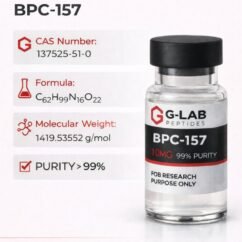 BPC-157 (5mg)
 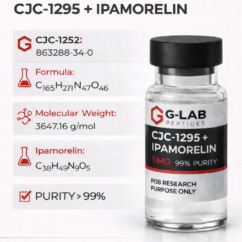 CJC-1295 + Ipamorelin (10mg)