
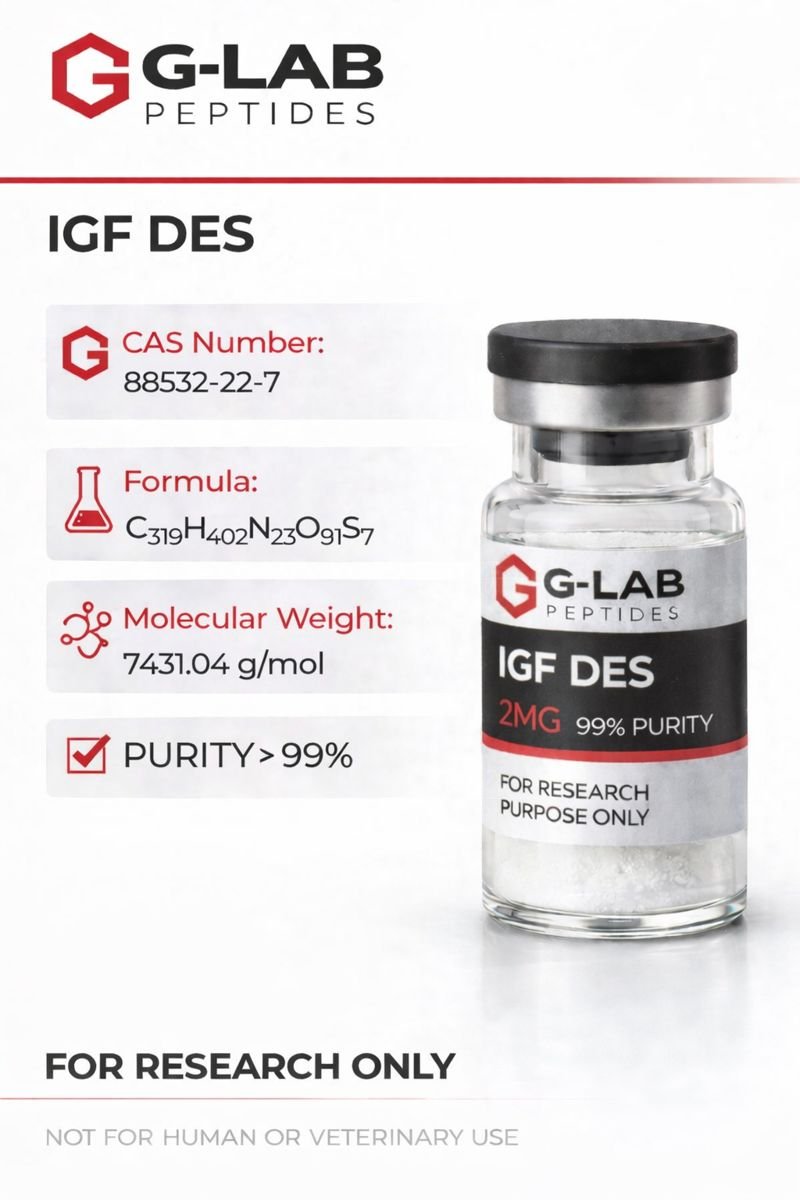
IGF DES (2mg)
$80.90
| Quantity | Discount | Price |
|---|---|---|
| 5 - 8 | 5% | $76.86 |
| 9+ | 10% | $72.81 |
Free shipping on orders over $200!
- Satisfaction Guaranteed
- No Hassle Refunds
- Secure Payments
IGF-1 DES (2 mg) – Research Peptide
IGF-1 DES (Insulin-Like Growth Factor-1 Des(1-3)) is a truncated analog of human IGF-1 lacking the first three N-terminal amino acids. This modification significantly reduces IGF-binding-protein affinity, increasing its bioavailability and potency at the IGF-1 receptor (IGF-1R).
In research settings, IGF-1 DES is widely used to study muscle hypertrophy, cellular proliferation, tissue repair, and growth-factor signaling dynamics.
Specifications
Synonyms: Des(1-3) IGF-1, truncated IGF-1 analog
Molecular Formula: C319H552N98O101S7
Molecular Weight: ~9,200 Da
Class: IGF-1 receptor agonist / growth-factor analog
Sequence: TFAED… (full human-analog sequence minus first 3 amino acids)
Mechanism of Action
IGF-1 DES displays ~10× higher receptor affinity than native IGF-1 due to its reduced interaction with IGF-binding proteins (IGFBPs).
Key experimental mechanisms include:
1. Potent IGF-1R Activation
IGF-1 DES binds IGF-1R, triggering:
PI3K → Akt → mTOR pathway activation
Protein synthesis
Myoblast differentiation
Satellite cell proliferation
Florini et al. showed enhanced myogenic differentiation and accelerated muscle-fiber maturation in vitro.
2. Reduced IGFBP Binding = Higher Local Potency
Removing the first three amino acids lowers IGFBP-3 affinity by ~90%, resulting in:
Greater free IGF-1 activity
Increased receptor activation at the injection site
Shorter systemic half-life but more potent localized effects
3. Synergy With Mechanical Load
Experimental data shows IGF-1 DES amplifies mechano-growth signaling in skeletal muscle:
Satellite cell activation
Increased muscle fiber cross-sectional area
Enhanced collagen remodeling in tendons
IGF-1 DES and Muscle Biology
Skeletal Muscle Hypertrophy
In rodent studies, muscle fiber diameter increased significantly following localized IGF-1 DES administration (Adams et al.).
Myoblast Proliferation
IGF-1 DES stimulates:
MyoD expression
Myogenin transcription
Enhanced fusion of myocytes into mature fibers
Recovery From Injury
Experimental models show accelerated repair after:
Muscle laceration
Denervation injury
Mechanical overload
Neural & Cognitive Research
Though not a cognitive peptide per se, IGF-1 signaling is involved in:
Neurogenesis
CNS repair
Synaptic survival
Anti-apoptotic pathways (Akt-dependent)
Rodent models demonstrated improved neuronal survival after ischemic or oxidative injury when IGF-1 DES was used locally.
IGF-1 DES and Collagen / Tendon Remodeling
Experimental use suggests:
Increased fibroblast proliferation
Enhanced type-I collagen deposition
Faster tendon healing after mechanical stress
These effects appear mediated through IGF-1R-Akt-mTOR pathways within tendon fibroblasts.
Metabolic Effects
In vitro and in vivo studies indicate IGF-1 DES may:
Increase glucose uptake via Akt signaling
Enhance glycogen storage
Improve insulin sensitivity in skeletal muscle
However, its short half-life limits systemic metabolic impact.
Other Experimental Applications
Bone Biology
IGF-1 DES promotes osteoblast proliferation and bone-matrix deposition in culture models.
Tissue Engineering
Used experimentally in:
Bioengineered muscle grafts
Collagen scaffold enhancement
Stem-cell differentiation trials
Cellular Growth & Repair Models
Because of its potency, IGF-1 DES is widely used in laboratories studying:
Anabolism
Wound healing
Growth-factor signaling
Cell-cycle progression
Research Use Only – Important Notice
This IGF-1 DES 2 mg product is supplied exclusively for laboratory research purposes.
Not for human or veterinary use
Not for diagnostic, therapeutic, or cosmetic applications
Intended for in vitro studies and/or controlled experimental animal research
All descriptions summarize preclinical findings only
Not to be interpreted as medical guidance or claims
References
Florini JR, Ewton DZ, Coolican SA. Growth hormone and the insulin-like growth factor system in myogenesis. Endocrine Reviews.
https://doi.org/10.1210/edrv-17-5-481Adams GR, Haddad F. The relationships among IGF-1, IGF binding proteins, and muscle mass in resistance-trained humans. Growth Horm IGF Res.
https://doi.org/10.1016/S1096-6374(96)80354-2Shavlakadze T, Grounds MD. Impact of IGF-1 on recovery from skeletal muscle injury. BMC Musculoskeletal Disorders.
https://doi.org/10.1186/1471-2474-7-41Duan C. Role of IGF system in muscle growth and development. General and Comparative Endocrinology.
https://doi.org/10.1016/j.ygcen.2015.10.011Carro E et al. Circulating IGF-1 regulates brain neurogenesis and neuroprotection. Nature Neuroscience.
https://doi.org/10.1038/nn733Yakar S et al. The role of the GH/IGF axis in skeletal development. Endocrinology.
https://doi.org/10.1210/en.2008-0632Steinbacher P, Eckl P. IGF-1 signaling in skeletal muscle repair. Journal of Muscle Research & Cell Motility.
https://doi.org/10.1007/s10974-016-9450-6
Related products
GHK-Cu
Price range: $58.90 through $81.90Select options This product has multiple variants. The options may be chosen on the product page
SS-31
Price range: $65.00 through $210.00Select options This product has multiple variants. The options may be chosen on the product page
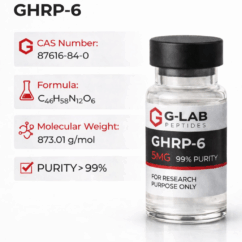 GHRP-6 (5mg)
 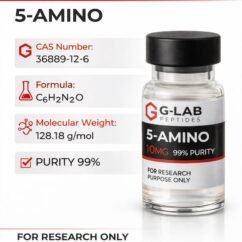 5-Amino (10mg)
 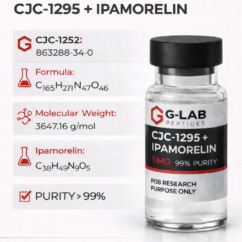 CJC-1295 + Ipamorelin (10mg)
 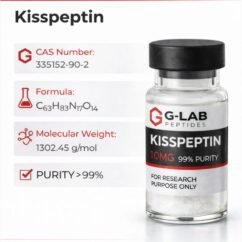 Kisspeptin (10mg)