
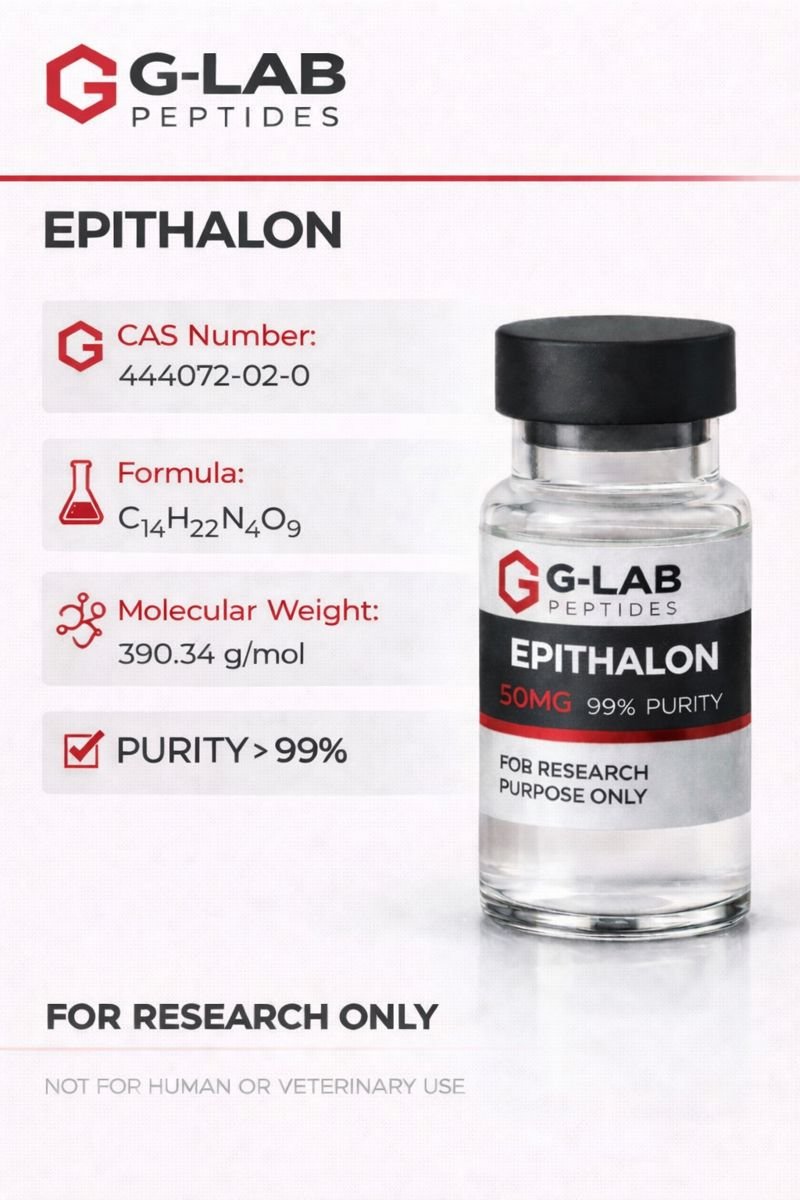
Epithalon (50mg)
$109.90
Out of stock
Free shipping on orders over $200!
- Satisfaction Guaranteed
- No Hassle Refunds
- Secure Payments
Epithalon (50 mg)
Telomerase-Modulating Peptide / Pineal Tetrapeptide / Longevity & Regeneration Research
Epithalon (also known as Epitalon or Ala–Glu–Asp–Gly) is a synthetic version of Epithalamin, a naturally occurring tetrapeptide isolated from the pineal gland. This peptide has been extensively studied in Russian and Eastern European biogerontology research for its potential influence on:
Telomerase activation
Telomere length maintenance
Cellular senescence modulation
Oxidative stress resistance
Neuroendocrine regulation
Immune system remodeling
Epithalon is widely used as a research tool in aging, cellular longevity, circadian biology, and regenerative medicine models.
Epithalon (50 mg) described here is for research use only.
Specifications
Synonyms: Epithalon, Epitalon, Ala-Glu-Asp-Gly, AEDG peptide, Epithalamin synthetic analog
Sequence: Ala–Glu–Asp–Gly
Molecular Formula: C₁₄H₂₂N₄O₉
Molecular Weight: ~390.3 g/mol
Class: Pineal tetrapeptide / telomerase-modulating research peptide
Presentation: 50 mg lyophilized peptide, ≥98% purity (research grade)
Mechanism of Action & Cellular Biology
Epithalon interacts with key molecular pathways involved in aging, telomere biology, and oxidative protection.
1. Telomerase Activation
Research shows that Epithalon can:
Increase telomerase reverse transcriptase (TERT) activity
Promote telomere elongation in somatic cells
Delay telomere shortening associated with replicative aging
This has been demonstrated in:
Fibroblast culture
Lymphocyte models
Senescence-accelerated animal models
2. Modulation of Cellular Senescence
Epithalon has been shown to:
Reduce β-galactosidase expression (senescence marker)
Improve cellular proliferation capacity
Decrease DNA damage markers in stressed cells
3. Antioxidant and Anti-Radical Effects
The peptide enhances natural antioxidant systems:
↑ Superoxide dismutase (SOD)
↓ Lipid peroxidation products (MDA)
↑ Cellular resistance to reactive oxygen species
4. Regulation of Circadian Rhythm & Endocrine Function
Epithalon influences:
The pineal–hypothalamic axis
Melatonin production and circadian rhythmicity
Age-related neuroendocrine decline
These mechanisms are foundational to aging research models.
Longevity, Aging & Geroprotection Research
Epithalon is most widely studied in lifespan and healthspan models.
1. Increased lifespan in animal models
Studies report:
Lifespan extension in rodents by up to 25–30% in select conditions
Improved overall vitality and reduced tumor incidence in aging cohorts
Restoration of circadian rhythmicity in older animals
2. Reduced incidence of age-related pathology
Research indicates:
Lower rates of spontaneous tumor formation
Improved immune function in aged animals
Protection against age-associated degenerative changes
3. Gene expression modulation
Epithalon influences expression of genes involved in:
Stress response
Inflammation
Metabolic regulation
DNA repair
Immune System & Anti-Inflammatory Research
1. Immunomodulation
Epithalon has demonstrated:
Enhanced T-cell proliferation
Improved thymus function in aging models
Reduction in inflammatory cytokines
2. Anti-inflammatory activity
Epithalon reduces:
TNF-α
IL-6
Oxidative stress–driven inflammatory cascades
These effects contribute to its use in immune aging research.
Neuroprotective & Cognitive Research
Epithalon may influence neuronal aging via:
Anti-oxidative pathways
Improved mitochondrial function
Protection of hippocampal neurons
Stabilization of circadian patterns affecting cognition
Research shows improvements in:
Learning and memory tasks (rodent models)
Sleep–wake cycle regularity
Age-related neurodegeneration markers
Dermatology, Tissue Repair & Regeneration
Epithalon studies demonstrate:
Increased fibroblast proliferation
Enhanced collagen type I and III synthesis
Reduced skin aging markers (elastosis, oxidative damage)
Improved wound healing capacity
These applications make it a frequent tool in dermatological and regenerative biology.
Safety, Limitations & Regulatory Notes
Epithalon is not approved for human therapeutic, cosmetic, or anti-aging use.
Research suggests low toxicity, but human long-term data is insufficient.
Results from Russian aging studies may not fully extrapolate across species or populations.
Research-grade peptide should not be used clinically or for self-administration.
Research Use Only – Important Notice
This Epithalon (50 mg) product is supplied exclusively for laboratory research.
Not for human or veterinary use
Not for anti-aging, cosmetic, or medical applications
For controlled in vitro and animal experiments only
Provided descriptions summarize findings from preclinical and cellular aging literature
Not to be interpreted as medical advice or dosing guidance
References (Peer-reviewed, Non-Wikipedia)
Khavinson VKh et al. Epithalon activates telomerase and elongates telomeres in human somatic cells. Bull Exp Biol Med.
https://pubmed.ncbi.nlm.nih.gov/12522020/
Anisimov VN et al. Pineal peptides and lifespan extension in rodents. Mech Ageing Dev.
https://pubmed.ncbi.nlm.nih.gov/11074490/
Pierpaoli W, Lesnikov VA. Immune restoration and aging models involving Epithalon. Ann N Y Acad Sci.
https://pubmed.ncbi.nlm.nih.gov/9710653/
Khavinson VKh, Malinin VV. Peptide regulation of aging: Epithalamin and Epithalon. Neuro Endocrinol Lett.
https://pubmed.ncbi.nlm.nih.gov/14647007/
Arutyunyan AV et al. Antioxidant and anti-radical properties of the pineal peptide Epithalon. Bull Exp Biol Med.
https://pubmed.ncbi.nlm.nih.gov/15807042/
Weinert BT, Timiras PS. The aging circadian system and endocrine modulation by pineal peptides. Biogerontology.
https://pubmed.ncbi.nlm.nih.gov/11067792/
Kozina LS et al. Effects of Epithalon on expression of stress-response and DNA repair genes. Mol Biol Rep.
https://pubmed.ncbi.nlm.nih.gov/21404050/
Related products
Tesamorelin
Price range: $86.90 through $115.00Select options This product has multiple variants. The options may be chosen on the product page
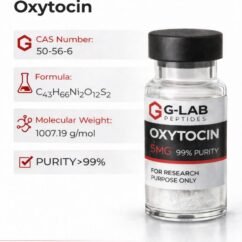 Oxytocin (5mg)
  Semax (10mg)