
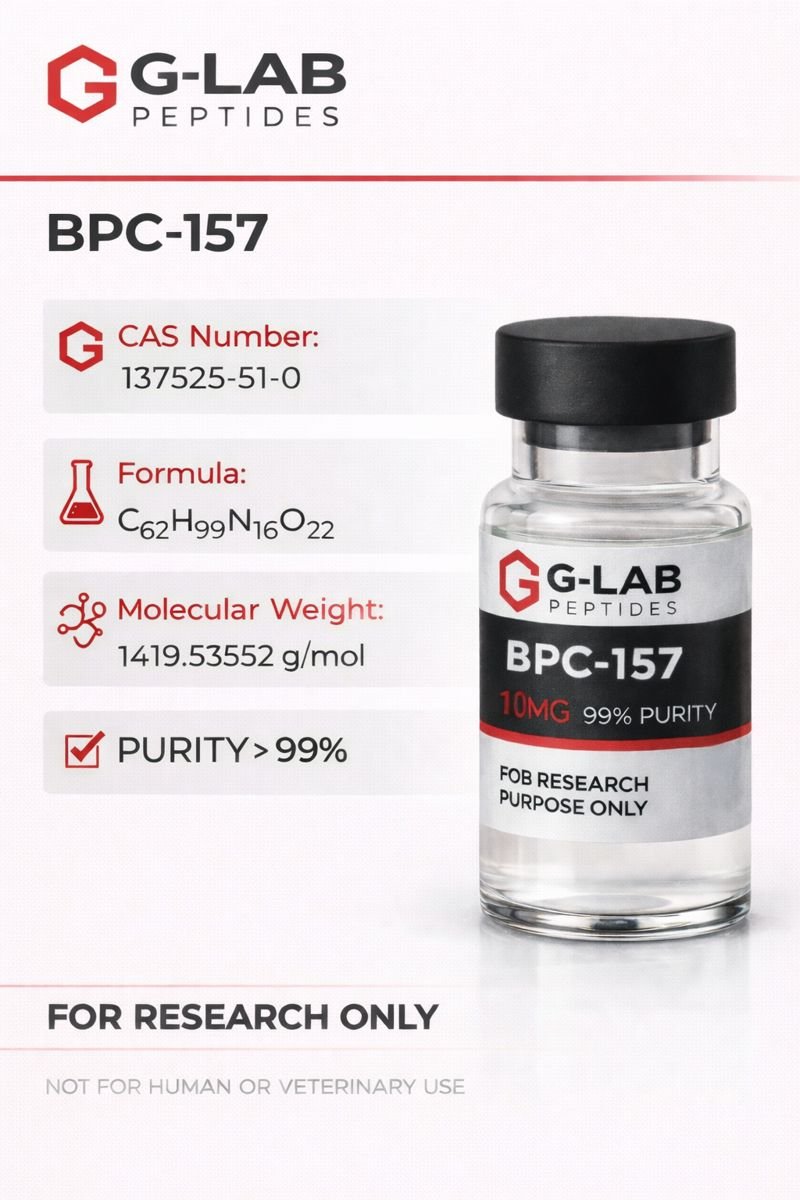
BPC-157 (5mg)
$57.99
| Quantity | Discount | Price |
|---|---|---|
| 5 - 8 | 5% | $55.09 |
| 9+ | 10% | $52.19 |
Free shipping on orders over $200!
- Satisfaction Guaranteed
- No Hassle Refunds
- Secure Payments
BPC-157 (5 mg)
BPC-157 (Body Protective Compound-157) is a synthetic pentadecapeptide (15 amino acids; sequence GEPPPGKPADDAGLV) originally derived from a partial sequence of a gastric protective protein isolated from human gastric juice. It has been investigated across numerous preclinical models for its potential to modulate angiogenesis, nitric oxide (NO) signaling, fibroblast activity, neuromuscular repair, and organ protection. ScienceDirect+2Frontiers+2
Experimental work suggests that BPC-157 can influence vascular endothelial growth factor receptor 2 (VEGFR2) signaling, Akt–eNOS pathways, ERK1/2, and other networks linked to tissue repair, vascular stability, and inflammation, though its precise primary molecular target remains incompletely defined. PMC+2MDPI+2
Specifications
Synonyms: Stable gastric pentadecapeptide, Body Protective Compound-157, PL-14736 (development code), BPC 157
Sequence: GEPPPGKPADDAGLV
Molecular formula: Approx. C₆₂H₉₈N₁₆O₂₂
Molecular weight: ~1419 Da ScienceDirect
Class: Synthetic pentadecapeptide / experimental cytoprotective and pro-angiogenic research peptide
Presentation:
Lyophilized powder, 5 mg per vial (research grade)
Reconstitution and working concentrations are experiment-specific and should be defined according to individual protocol design and literature precedents.
Mechanism of Action and Signaling Pathways
BPC-157 is described as a pleiotropic peptide engaging multiple overlapping pathways rather than a single receptor:
Angiogenesis and VEGF signaling
Preclinical studies show BPC-157 modulates VEGFR2 and downstream Akt–eNOS signaling, promoting endothelial cell survival, migration and capillary-like tube formation in vitro and improved microvascular integrity in vivo. PMC+2Frontiers+2
Nitric oxide (NO) and vasomotor control
In an isolated aorta model, Hsieh et al. demonstrated that BPC-157 modulates vasomotor tone in a concentration- and NO-dependent manner, increasing NO generation and reducing the interaction of caveolin-1 with eNOS via a Src–Cav-1–eNOS axis, thereby enhancing eNOS activity. Nature+1
ERK1/2 and cytoprotection
Experimental work summarized by recent narrative and systematic reviews indicates that BPC-157 activates ERK1/2 and related survival pathways in models of wound repair, myotendinous injury, and organ ischemia–reperfusion. PMC+2MDPI+2
Cytoprotection “stomach–organ axis”
The “stomach cytoprotection to systemic organoprotection” concept suggests that BPC-157, initially defined as a gastric cytoprotective peptide, exhibits broader protective effects across gut, liver, brain, cardiovascular system and musculoskeletal tissues in animal models. Frontiers+2GutnLiver+2
Overall, BPC-157 is considered a multifunctional research peptide, useful to probe the interplay among angiogenesis, NO biology, inflammation, and tissue regeneration across diverse preclinical models.
Tendon, Muscle, Ligament and Orthopaedic Research
BPC-157 is most widely known for its use in tendon and myotendinous repair models:
Achilles tendon healing
Staresinic et al. showed that BPC-157 significantly accelerated healing of transected rat Achilles tendon, reducing defect size and improving biomechanical properties; in vitro, BPC-157 stimulated tendocyte growth. PubMed+1
Tendon fibroblast outgrowth and migration
Chang et al. demonstrated that BPC-157 promotes ex vivo outgrowth of tendon fibroblasts, enhances cell survival under stress, and stimulates fibroblast migration, suggesting direct actions on tendon repair cells. Physiology Journals
Myotendinous junction and soft-tissue repair
Japjec et al. reported that BPC-157 restores the myotendinous junction and supports coordinated healing of transected muscle, tendon and ligament in rat models, with better structural organization and reduced inflammatory infiltrate compared to controls. MDPI
Orthopaedic sports medicine perspective
A recent systematic review in orthopaedic sports medicine concluded that BPC-157 shows promising preclinical results in muscle, tendon, ligament and bone injury models, but emphasized that clinical data are extremely limited, with only small, uncontrolled human series and no robust safety dataset. PMC+2PubMed+2
These data support BPC-157 as a research tool for studying musculoskeletal healing, tendon biology and soft-tissue regeneration, while highlighting the gap between animal data and human evidence.
Gastrointestinal, Wound-Healing and Organ-Protection Research
BPC-157 was originally characterized as a gastric mucosal peptide and extensively studied in GI and wound models:
Gastrointestinal mucosal protection
Preclinical studies and narrative reviews describe BPC-157 as protective in gastric, esophageal and colonic injury models, including NSAID-induced lesions, stress ulcers and inflammatory bowel disease models, with improved mucosal integrity and angiogenesis. Frontiers+2GutnLiver+2
Cutaneous and deep-tissue wound healing
Seiwerth et al. summarized that BPC-157 effectively accelerates wound closure, improves granulation tissue, and counteracts bleeding disorders in several models, including amputation and anticoagulant-induced bleeding, partly by normalizing microvascular architecture. Frontiers+1
Ischemia–reperfusion and thrombosis models
BPC-157 has been reported to reduce both arterial and venous thrombosis, promote bypassing of vessel occlusions (“collateralization”), and ameliorate ischemia–reperfusion damage in multiple organs (heart, brain, GI tract) in rodents. Frontiers+1
These findings position BPC-157 as a versatile organ-protection probe for experimental work on microcirculation, thrombosis, and healing in GI and systemic models.
Central Nervous System, Brain Trauma and Neuroprotection
BPC-157 has also been investigated in CNS and neurotrauma models:
Traumatic brain injury (TBI)
Tudor et al. found that BPC-157 produced consistent clinical and histological improvement in mice after TBI of varying severities, including reduced brain edema and neuronal damage. ScienceDirect
Later reviews confirm attenuation of neurological deficits and improved functional outcomes in several brain trauma paradigms. Lippincott Journals+1
Hippocampal ischemia/reperfusion
Vukojević et al. showed that BPC-157 ameliorated hippocampal ischemia/reperfusion injury, reducing neuronal loss and improving cognitive performance in behavioral tests. Wiley Online Library+1
Broader CNS protection
A focused review on BPC-157 and the CNS summarizes beneficial signals in models of spinal cord injury, stroke, peripheral nerve injury and neurodegenerative-like conditions, though all data are preclinical. Lippincott Journals+1
These investigations make BPC-157 relevant for experimental neuroprotection, neurovascular coupling and brain repair research, while underscoring that there is no established clinical neuroprotective indication.
Vascular Biology, Nitric Oxide and Angiogenesis
The vascular actions of BPC-157 are a key mechanistic focus:
NO-dependent vasomotor modulation
In vitro and ex vivo work shows that BPC-157 modulates vasorelaxation and vasoconstriction in an NO-dependent manner, with evidence of increased NO bioavailability via Src–Cav-1–eNOS signaling and reduced caveolin-1 inhibition of eNOS. Nature+1
Angiogenesis and microvascular repair
Studies and reviews describe enhanced capillary formation, endothelial repair and revascularization in models of skin wounds, GI lesions, and tendon or muscle injury. Frontiers+2GutnLiver+2
Systemic vascular protection
BPC-157 is reported to counteract damage to vessels in models induced by toxins, hypertension or anticoagulants, reducing hemorrhage and thrombosis and promoting functional collateral circulation. Frontiers+1
These vascular effects are central to the proposed mechanism of how BPC-157 contributes to enhanced healing and organ protection in animal models.
Safety, Regulatory Status and Limitations of Evidence
Recent reviews and regulatory communications emphasize important caveats:
Preclinical vs human data
A 2025 systematic review notes that almost all data are from animal or in vitro studies, with very limited human evidence, often uncontrolled or anecdotal. MiraSmart+3PMC+3MDPI+3
Regulatory status
BPC-157 is not approved by the U.S. FDA or EMA as a drug, and major sports bodies (e.g., WADA, UFC, NFL, NCAA) list it as a banned substance due to its experimental nature and potential performance-enhancing properties. PubMed+2MiraSmart+2
Quality and contamination concerns
News and expert commentary highlight safety risks associated with unregulated peptide products, including mislabeling, contamination and uncertain dosage, and warn against unsupervised self-administration. Verywell Health+2The Washington Post+2
Taken together, BPC-157 should be regarded strictly as a research chemical. Existing evidence does not establish safety, dosing, or efficacy for human therapeutic use.
Other Experimental Applications
Systemic organ protection:
Used in models of liver, heart, kidney and GI ischemia–reperfusion injury, often with reduced biochemical markers of damage and improved histology. Frontiers+1Metabolic and inflammatory models:
Investigated in settings of systemic inflammation, sepsis-like states, and metabolic disturbances, with reported anti-inflammatory and cytoprotective signals in preclinical work. MDPI+2Frontiers+2Patent and translational research:
A 2025 review details multiple patent applications and proposed medical uses, underscoring scientific interest but also the gap between patents and validated clinical indications. MDPI+1
Research Use Only – Important Notice
This BPC-157 (5 mg) product is supplied exclusively for laboratory research purposes.
Not for human or veterinary use
Not for diagnostic, therapeutic, or cosmetic applications
Intended only for in vitro experiments and/or appropriately controlled animal studies by qualified professionals
All descriptions above summarize findings from preclinical and mechanistic studies, plus limited low-level human data.
They must not be interpreted as medical claims, dosing recommendations, or guidance for self-administration or clinical treatment.
References
McGuire FP. Regeneration or Risk? A Narrative Review of BPC-157 for Tissue Repair and Organ Protection. Pharmaceuticals. 2025. PMC
Józwiak M. et al. Multifunctionality and Possible Medical Application of the BPC 157 Peptide—Literature and Patent Review. Pharmaceuticals. 2025;18(2):185. MDPI
Sikiric P. et al. BPC 157 Therapy: Targeting Angiogenesis and Nitric Oxide’s Cytotoxic and Damaging Actions, but Maintaining Their Protective Functions. Pharmaceuticals. 2025;18(10):1450. MDPI+1
Staresinic M. et al. Gastric pentadecapeptide BPC 157 accelerates healing of transected rat Achilles tendon and stimulates tendocyte growth in vitro. J Orthop Res. 2003;21(6):976–983. PubMed+1
Chang CH. et al. The promoting effect of pentadecapeptide BPC 157 on tendon fibroblast outgrowth, survival and migration. J Appl Physiol. 2011;110(3):646–654. Physiology Journals
Japjec M. et al. Stable Gastric Pentadecapeptide BPC 157 as a Therapy for Myotendinous Junction Healing. Biomedicines. 2021;9(11):1547. MDPI
Seiwerth S. et al. Stable Gastric Pentadecapeptide BPC 157 and Wound Healing. Front Pharmacol. 2021;12:627533. Frontiers
Sikiric P. et al. Stable Gastric Pentadecapeptide BPC 157 and the Stomach Cytoprotection–Organoprotection Concept. Gut Liver. 2020;14(6):669–688. GutnLiver
Hsieh MJ. et al. Modulatory effects of BPC 157 on vasomotor tone and the Src–Cav-1–eNOS axis in isolated rat aorta. Sci Rep. 2020;10:15443. Nature
Tudor M. et al. Traumatic brain injury in mice and pentadecapeptide BPC 157. Brain Res Bull. 2010;82(5–6):224–230. ScienceDirect
Vukojević J. et al. Pentadecapeptide BPC 157 and the central nervous system. Neural Regen Res. 2022;17(3):543–556. Lippincott Journals
Vukojević J. et al. Effect of pentadecapeptide BPC 157 on hippocampal ischemia/reperfusion injuries. Brain Behav. 2020;10(11):e01726. Wiley Online Library
Vasireddi N. et al. Emerging Use of BPC-157 in Orthopaedic Sports Medicine: A Systematic Review. (AAOS / PubMed record). 2025. PMC+2
Related products
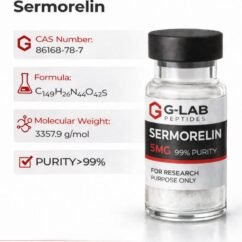
Sermorelin
Price range: $50.90 through $89.90Select options This product has multiple variants. The options may be chosen on the product page
 LL-37 (5mg)
  Semax (10mg)