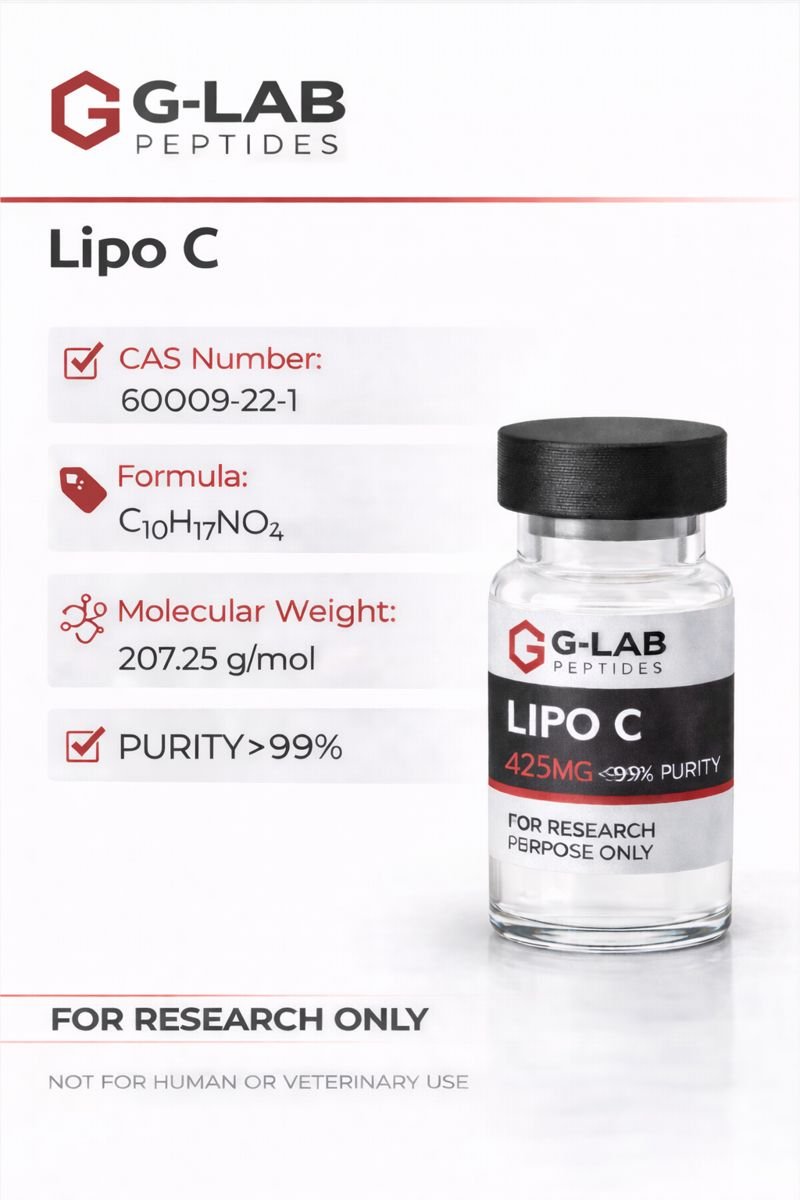
Lipo C 425 (425mg)
$59.90
| Quantity | Discount | Price |
|---|---|---|
| 5 - 8 | 5% | $56.91 |
| 9+ | 10% | $53.91 |
Free shipping on orders over $200!
- Satisfaction Guaranteed
- No Hassle Refunds
- Secure Payments
Lipo C 425
Lipo C 425 is a multi-component lipotropic and metabolic cofactor solution typically combining methionine, inositol, choline, L-carnitine, vitamin C (ascorbic acid) and selected B-complex vitamins (e.g., B₆, B₁, B₅, B₁₂) in a total active content of approximately 425 mg per mL (exact composition may vary by lot and should be confirmed on the certificate of analysis).
The formulation is designed as a research tool to probe how combined lipotropic factors and mitochondrial cofactors influence hepatic fat handling, mitochondrial fatty-acid oxidation, energy metabolism, oxidative stress, and weight-regulation pathways in experimental models. Lipotropic nutrients such as choline, methionine, inositol and carnitine are recognized for their ability to modulate hepatic lipid export and prevent fatty infiltration in preclinical systems. PubMed+1
Specifications
Synonyms (formulation-level): Lipo C 425, MIC–C complex, methionine–inositol–choline–carnitine–ascorbate blend, Lipo-C research solution
Typical active constituents (per mL, illustrative):
Methionine (lipotropic sulfur amino acid)
Inositol (polyol involved in phospholipid and signaling pathways)
Choline (lipotropic amine, phosphatidylcholine precursor)
L-Carnitine (mitochondrial fatty-acid shuttle)
Vitamin C (ascorbic acid; antioxidant and carnitine biosynthesis cofactor)
B-complex vitamins (e.g., pyridoxine/B₆, dexpanthenol/B₅, thiamine/B₁, cyanocobalamin/B₁₂)
Molecular formula: Mixture (not applicable)
Molecular weight: Mixture (not applicable)
Class: Multi-component lipotropic / metabolic cofactor research solution
(Exact quantitative composition is product-specific and should be confirmed from the batch COA and internal specifications.)
Mechanism of Action and Lipotropic / Mitochondrial Signaling
Lipo C 425 combines several well-characterized lipotropic and mitochondrial cofactors:
Methionine & Choline
Act as classical lipotropic agents, supporting hepatic export of triglycerides via phosphatidylcholine and VLDL synthesis and preventing excessive hepatic fat deposition. PMC+1
Methionine contributes methyl groups (via S-adenosylmethionine), influencing homocysteine metabolism and global methylation reactions relevant to lipid and energy pathways. MDPI
Inositol
Serves as a structural component of phosphatidylinositol and inositol phosphates and is involved in cell signaling and membrane dynamics that can influence adipocyte and hepatic lipid handling. PubMed
L-Carnitine
Vitamin C (ascorbic acid)
Acts as an antioxidant and is a required cofactor for endogenous carnitine biosynthesis; suboptimal vitamin C status is associated with impaired fat oxidation and lower carnitine-related fatty-acid utilization. PMC+1
B-complex vitamins
Support mitochondrial energy metabolism, including oxidative decarboxylation, TCA-cycle flux, and fatty-acid activation, thereby complementing the lipotropic and carnitine components. PubMed+1
Collectively, Lipo C 425 is used in vitro and in vivo as a composite probe to investigate how simultaneous modulation of hepatic lipid export, mitochondrial β-oxidation, methylation capacity and antioxidant defenses influences fatty-liver development, energy expenditure and systemic metabolic homeostasis.
Lipo C 425, Glucose Homeostasis and Insulin Sensitivity
Although controlled clinical evidence for lipotropic “cocktail” injections in humans is limited, the individual components of Lipo C 425 have been studied in metabolic and obesity-related models:
L-Carnitine and body-weight regulation
Multiple meta-analyses of L-carnitine supplementation in adults with overweight or obesity report modest but statistically significant reductions in body weight, BMI, waist circumference and fat mass, especially when combined with lifestyle interventions. PubMed+2ScienceDirect+2
These effects are generally attributed to enhanced mitochondrial fatty-acid oxidation and altered substrate utilization.
Lipotropic factors, hepatic fat and insulin action
Methionine– and choline-deficient diets are widely used to induce fatty liver and insulin resistance in rodent models, while adequate or supplemented methionine and choline mitigate steatosis and improve metabolic phenotype. PMC+2PMC+2
These findings support the concept that lipotropic nutrients modulate hepatic lipid load, which in turn influences peripheral insulin sensitivity.
Vitamin C, carnitine and fat oxidation
Vitamin C deficiency or marginal status is associated with reduced fat oxidation during submaximal exercise and may limit carnitine-dependent fatty-acid utilization. PMC+1
Together, these data justify Lipo C 425 as a research formulation for exploring how combined lipotropic and mitochondrial cofactors impact glucose tolerance, insulin sensitivity and body-weight regulation in experimental systems. Human data on multi-component lipotropic injections remain sparse, and available reviews emphasize that any weight change in clinical programs is strongly confounded by concurrent diet and exercise interventions. Healthline
Hepatic and Cardiometabolic Research
Hepatic steatosis and lipoprotein metabolism
Lipotropic agents have long been used to probe mechanisms of fatty liver (hepatic steatosis) and its prevention:
Classic and modern studies show that choline and methionine supplementation can attenuate or prevent diet-induced fatty liver in animal models, whereas deficiency in these nutrients rapidly promotes hepatic triglyceride accumulation. MDPI+3PMC+3ScienceDirect+3
Reviews of lipotropic factors describe choline, methionine, inositol and carnitine as key nutrients that hasten hepatic fat export and support normal lipid distribution across tissues. PubMed+2ScienceDirect+2
By combining these agents, Lipo C 425 is suitable for research on:
Mechanisms of NAFLD and NASH models
Lipoprotein assembly and VLDL secretion
Interactions between hepatic fat, inflammation and systemic insulin resistance
Cardiometabolic and mitochondrial stress
Because disturbances in fatty-acid oxidation can lead to ectopic lipid deposition in heart and skeletal muscle, carnitine-dependent pathways have been central in cardiometabolic research. PMC+1
Within such models, Lipo C 425 can be used to:
Explore whether enhancing carnitine-mediated β-oxidation and lipotropic support reduces ectopic lipid accumulation
Study changes in cardiac and skeletal-muscle energetics and mitochondrial function under high-fat or hyperglycemic conditions
Inflammation, Oxidative Stress and Organ Injury
Lipo C 425 contains several components that intersect with oxidative stress and inflammatory pathways:
Vitamin C provides direct antioxidant activity and supports regeneration of other antioxidants, potentially limiting ROS-mediated damage in models of metabolic stress and fatty liver. Nature
L-Carnitine has been investigated for reducing oxidative stress and improving mitochondrial function in tissues exposed to high lipid load or ischemia–reperfusion, partly through improved fatty-acid flux and reduced acyl-CoA accumulation. PMC
Lipotropic sulfur amino acids (e.g., methionine) influence homocysteine and sulfur metabolism, which are linked to redox status and endothelial function in cardiometabolic settings. MDPI
In combination, these factors make Lipo C 425 a suitable tool to explore:
The interface between lipid overload, mitochondrial function and inflammation
How modulation of hepatic and systemic redox balance impacts progression from steatosis to steatohepatitis in preclinical models
Other Experimental Applications
Energy metabolism and exercise models
Lipo C 425 can be used to mimic aspects of enhanced fat oxidation and mitochondrial support in exercise or training models, through its combined effects on carnitine availability, B-vitamin–dependent energy pathways and vitamin C–dependent carnitine biosynthesis.
Nutrient interaction and systems biology
Because it contains multiple lipotropic and metabolic cofactors, Lipo C 425 is useful for systems-level studies probing:
Nutrient–nutrient interactions (e.g., carnitine–ascorbate–B-vitamins)
Integrated effects on hepatic, adipose and muscle metabolism
Omics-level changes (transcriptomic, metabolomic) in models of dietary stress
Comparative lipotrope studies
The formulation can serve as a reference cocktail when comparing single-agent versus combination lipotropic strategies in vitro or in animal models of fatty liver, obesity, or diet-induced metabolic dysfunction.
Research Use Only – Important Notice
This Lipo C 425 product is supplied exclusively for laboratory research purposes.
Not for human or veterinary use
Not for diagnostic, therapeutic, or cosmetic applications
Intended only for in vitro studies and/or appropriately controlled experimental animal models conducted by qualified professionals
All descriptions above summarize findings from preclinical and mechanistic studies of the individual components and related lipotropic concepts.
They must not be interpreted as medical claims or guidance for any form of self-administration, clinical use, or weight-loss treatment.
References
Fardet A. Plant-based foods as a source of lipotropes for human nutrition: choline, betaine, myo-inositol, methionine and carnitine. Crit Rev Food Sci Nutr. 2013. PubMed
Fardet A. Lipotropic capacity of raw plant-based foods: a new index. J Nutr Biochem. 2011. ScienceDirect
Choi YI. Nutritional and hormonal induction of fatty liver syndrome and fatty liver hemorrhagic syndrome in laying hens. World’s Poult Sci J. 2012. PMC
Pissios P. Methionine and choline regulate the metabolic phenotype of a ketogenic diet-fed mouse model. PLoS One. 2013. PMC
Toohey JI. Sulfur amino acids in diet-induced fatty liver. Molecules. 2014;19(6):8334–8357. MDPI
Longo N. Carnitine transport and fatty acid oxidation. J Inherit Metab Dis. 2016;39(4):545–557. PMC
Talenezhad N. et al. Effects of L-carnitine supplementation on weight loss and body composition: a systematic review and meta-analysis. Clin Nutr ESPEN. 2020. PubMed+1
Askarpour M. et al. Beneficial effects of L-carnitine supplementation for weight management: a meta-analysis of randomized controlled trials. Obes Med. 2020. ScienceDirect+1
Johnston CS. et al. Marginal vitamin C status is associated with reduced fat oxidation during submaximal exercise in young adults. Nutr Metab (Lond). 2006;3:35. PMC
Lee H. et al. Ascorbic acid inhibits visceral obesity and nonalcoholic fatty liver disease by regulating carnitine biosynthesis and mitochondrial function. Int J Obes (Lond). 2019. Nature
Healthline Editorial. Lipotropic injections: benefits, side effects, dosage and cost. 2023. (Overview of lipotropic formulations and current evidence.) Healthline
Related products

Tesamorelin
Price range: $86.90 through $115.00Select options This product has multiple variants. The options may be chosen on the product pageMOTS-c
Price range: $76.90 through $155.00Select options This product has multiple variants. The options may be chosen on the product pageGHK-Cu
Price range: $58.90 through $81.90Select options This product has multiple variants. The options may be chosen on the product page